

Recently, a single 16th-century Jain manuscript went under the hammer at Sotheby’s, valued at up to £25,000. Now, scale that single artifact across the 1.2 crore manuscripts and a few lakh inscriptions quietly aging in India’s archives. We aren’t just sitting on an intellectual fortune—we are watching our civilizational memory either fade in the dark or get parceled off to the highest bidder, simply because we haven’t built the infrastructure to read it.
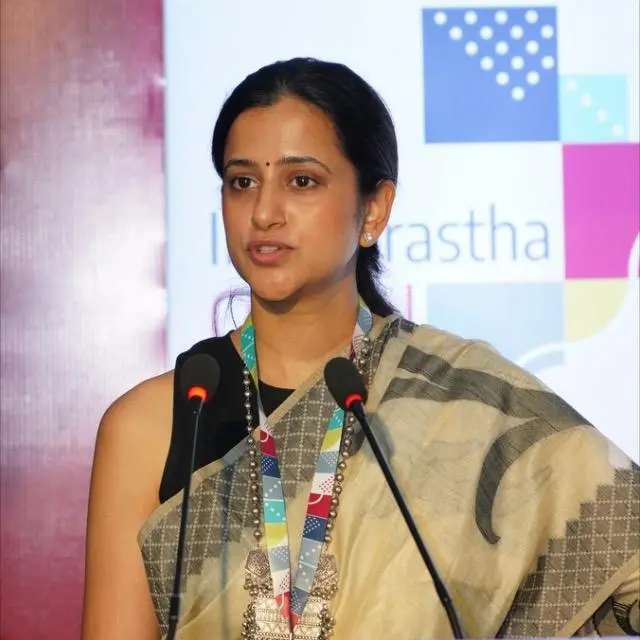
“If we don’t bring our history online, the next generation will naturally assume it never existed. If it is not on their screens, it is lost,” Pooja Porwal, CEO of the Manuscripts and Inscriptions Digitization Foundation, told me.
This statement is not a theoretical warning; it is a direct indictment. It ought to disturb India’s billionaires and captains of industry far more than any market fluctuation. Wealth can build skyscrapers, fund sports teams, and buy global assets, but it cannot purchase back an erased past once the last manuscript turns to dust. If our business leaders do not act now, future generations will ask a damning question: When you had the resources to save our civilizational memory, why did you let it vanish?
For decades, we satisfied our conscience with passive custody—silk wraps, air-conditioned vaults, and token grants. Meanwhile, 10 million manuscripts—the world’s largest intellectual inheritance—silently rotted away.
However, less than 1% of this vast corpus is searchable, machine-readable, or accessible on the open web. In an era where global Artificial Intelligence models are rapidly indexing human knowledge to build tomorrow’s narrative engines, India’s primary sources remain largely offline, illegible, or difficult for global researchers to access at scale.
The Manuscripts and Inscriptions Digitization Foundation (MIDF) was founded to treat this missing layer not as a charitable pursuit, but as a critical technology problem. Led by former FinTech-er Pooja Porwal, MIDF is engineering Smriti—an open-access Digital Public Infrastructure designed to transcribe, index, and structure Indic texts for the modern digital age.
In this candid interview for The Dossier, Porwal discusses her transition from scaling FinTech platforms to building civilizational infrastructure, the complex logistical challenges scholars face in accessing primary data, how private tech initiatives can support national goals, and the urgent economic realities of training indigenous OCR models.
S Shiva: You spent nearly eight years scaling tech and product infrastructure in the FinTech sector. Jumping from high-tech corporate environments into historical manuscript preservation is a radical shift. What pulled you into this space?
Pooja Porwal: It is a 180-degree turn on paper, but operationally, the mindset is identical. When you work in FinTech, your brain is rewired to identify friction and system failures—where the system breaks, where the technology gap lies, and how to build scalable rails to fix it.
When I first looked at manuscript preservation, I didn’t approach it with academic nostalgia. I saw a massive, open data ecosystem waiting to be built. India has one of the oldest and largest libraries in the world; we just don’t have a search bar for it. We hold over a crore manuscripts and lakhs of inscriptions, yet for decades, we have brushed vast swathes of this inheritance aside under the loose label of “mythology.”
It’s only when you spend time in the field that you realize the scale of intellectual data we are sitting on—treatises on 3rd-century cataract surgeries, rhinoplasty procedures, astronomical calculations, agricultural systems, and trade logic. But because no one built an enterprise-grade digital infrastructure to transcribe and index this data, it remains dormant. Once you see a system gap of that magnitude right in front of you, you cannot unsee it.
SS: Growing up in Belgaum, Karnataka, with family roots in Rajasthan, did you have early personal exposure to these texts?
PP: In pockets, yes, but without understanding their true context. Most traditional households in Belgaum had old wooden trunks (sandooks) where families stored ancient scripts. In Rajasthan, during hot summers, my family used to store valuables in containers buried beneath the mud flooring of inner rooms—and alongside silver or keys, there would be aged leaf manuscripts.
My maternal grandfather was the first to earn an MBA from his village and was deeply interested in Sanskrit. After he passed away, my grandmother kept his collection. We preserved these items out of familial respect, but no one in the household could actually read them. That is the story of millions of families across India: we worship or lock away artifacts, but we have lost the capability to read the dataset inside them.
SS: Given the sheer scale of materials across state archives, universities, and private collections, what does a researcher actually encounter when trying to study a primary source today?
PP: It is honestly a test of endurance. A scholar trying to access just one specific text for their research often faces a multi-year odyssey.
They travel across the country at their own expense, only to face months of bureaucratic approvals because these artifacts are so fragile. When finally allowed inside, they get short, strictly supervised glimpses. No photos, no direct scanning. They sit there manually transcribing what they can before their time is up. It can take two and a half years of exhausting back-and-forth just to study a single document.
Imagine a young, unfunded student facing that barrier. We are asking our brightest minds to spend 90% of their energy fighting logistics, just so they can spend 10% actually studying our history. It is heartbreaking to think how much knowledge is just sitting there in the dark.
Now imagine an independent scholar without that level of institutional backing or flexible travel budget. They are often forced to rely on secondary or tertiary summaries online.
When researchers lack seamless access to primary inputs, the depth of global academic output naturally faces constraints.
SS: How can tech-led initiatives like MIDF expand upon foundational archival work to create true digital searchability?
PP: It comes down to how we define and execute “digitization” at an enterprise software level. Historically, preservation focused primarily on physical conservation or creating high-resolution digital image files (PDFs) stored across decentralized repositories.
While state and academic bodies have done monumental work cataloging and preserving physical leaves, building a machine-readable data layer requires a specialized tech stack. Capturing visual scans is only step one; turning written classical scripts into searchable text that an algorithm or database can query is an entirely different engineering challenge.
Public institutions handle massive physical volumes and administrative responsibilities every day. A specialized digital infrastructure engine like MIDF exists to bridge the software gap—creating open-access, fully indexed standards that can integrate with national digitization efforts and make those vast collections instantly searchable for global researchers.
SS: We often hear about India building indigenous AI models like Sarvam AI or BharatGen. How does structuring historical data accelerate Indian AI capabilities?
PP: An AI engine is only as intelligent as its training data. If your foundational corpus is unindexed, your native AI will default to whatever is already structured on open Western web sources.
If you ask a standard LLM today who invented zero, it will answer “Aryabhata.” But primary physical records like the Bakhshali Manuscript, demonstrate that zero was used in written mathematical calculations centuries prior. Because the Bakhshali manuscript was not previously indexed into modern digital training modules, AI models continue repeating incomplete historical data.
Look at global comparisons:
China: Deals with a corpus of roughly 60,000 historical texts, over 90% of which is machine-readable and incorporated into native AI models.
India: Sits on over 1.2 crore manuscripts, and a few lakh inscriptions but less than 1% is currently indexed for machine search.
Global institutions are actively digitizing classical literature and establishing proprietary databases. If India does not build its own open, machine-readable digital core today, future generations will be forced to rely on foreign platforms for their own civilizational knowledge.
SS: How is MIDF’s approach technically structured to address this?
PP: We focus on enterprise metadata standards, open access, and AI-assisted workflows.
First, we do not settle for basic cataloging. While traditional programs log standard catalog fields, MIDF—standards laid by subject matter experts—enforces a standard of 92 distinct metadata fields for inscriptions and 56 fields for manuscripts. We systematically record script, lipi, dynasty, physical condition, donor lines, language variations, and precise geolocation.
Second, we are tackling the Optical Character Recognition (OCR) challenge. Standard commercial OCR tools yield low accuracy on handwritten Indic scripts and palm leaves because they were built for modern print fonts, not historical scripts like Modi or Odia. MIDF is training specialized machine-learning models to achieve high-fidelity automated transcription.
Third, we issue financial and technical grants to ground-level initiatives. Organizations like E-Gangotri or E-Sahitya have performed dedicated preservation work for years. We support them with standardized tech protocols, high-resolution equipment, and capital so their output integrates seamlessly into national DPI standards.
SS: Has MIDF demonstrated this execution model on complex collections or master catalogs yet?
PP: Yes. A primary example is Epigraphia Indica—a monumental 43-volume series detailing Mauryan edicts, Ashokan inscriptions, and royal land grants across dynasties. Fascicles first began appearing in 1888, with the first full volume published in 1892. For over a century, these records remained out of print and hard to access for young scholars. MIDF recently processed, transcribed, translated into English, and published 7 complete volumes on the web, making them 100% open-source and machine-searchable.
Beyond epigraphy, we are also bringing foundational cataloging infrastructure online—most notably digitizing and structuring the New Catalogus Catalogorum (NCC). By converting these master volumes into an open-access, searchable digital index, we are opening up discovery access to lakhs of hidden manuscripts across Indian archives for the very first time.
SS: What are the capital requirements to scale an initiative like Smriti, and why is relying purely on volunteer labor insufficient?
PP: There is a pervasive belief that civilizational work should operate strictly through low-cost, voluntary effort. But building enterprise-grade software infrastructure requires full-time, professional execution.
If I need to hire elite software architects to build ML pipelines or senior UI/UX designers, we operate in the same talent market as commercial tech firms. Relying solely on part-time volunteer hours limits how fast a national-scale platform can deploy.
The financial requirements are straightforward:
GPU & Cloud Infrastructure: Running high-performance server clusters to process high-resolution scans and train Indic OCR models – they come at steep costs.
Capital Need: MIDF is seeking Rs 15 Crores over two years to fully scale Smriti, deploy field equipment across partner archives, retain engineering talent, and build out the open-access corpus.
To put that figure in perspective: Rs 15 Crores is less than the production budget of a single low-budget commercial movie. For the cost of a two-hour piece of entertainment, India can permanently index and safeguard 5,000 years of written intellectual history.
SS: How is MIDF building its runway currently?
PP: We received initial seed capital from The Hindu Fund, which allowed us to build the platform prototype and publish the initial volumes of Epigraphia Indica. Beyond that, we have drawn strength from retail interest—patrons who recognize the civilizational importance of this work.
However, to build a permanent, institutional infrastructure that outlasts individuals, we need structured institutional capital and strategic philanthropy. We are laying the digital data foundation for India’s future—and that is a vital infrastructure investment for our society to make.
About The Hindu Fund: A grant-making platform under the Hindu Network Foundation—founded by Rahul Dewan and backed by the legacy of Sarayu Foundation Trust—building a Rs 1,000 Crore corpus to provide liberal grants to Dharmic change-makers without red tape.
[ Explore Smriti here ] | [ Contribute to the MIDF Digitization Engine on The Hindu Fund Portal here ]