

The Vedas are neither books nor the utterances of persons, but the accumulated treasury of spiritual laws that have existed throughout time. They were never written, never created. When we say that the Vedas are beginningless and eternal, it means that the law or truth revealed by them to man is permanent and changeless.
They do not owe their authority to anybody. The real study is ‘that by which we realize the Unchangeable.’ This means neither reading nor believing nor reasoning, but superconscious perception or Samadhi.
Vedanta lays down the principles, maps out for us the goal, and then teaches us the various methods by which we can arrive at the goal. Man can take up any method he likes, and if it turns out to be not suitable, another method may be tried.
One peculiarity of the Vedas is that they repeatedly declare that you must go beyond them; they were written just for the child-mind, and when you have grown, you must go beyond them.
The study of the Vedas is secondary.
All inquiries of the Vedanta philosophy have to be inside us. As the Hindu sages were not satisfied with their attempts to explain the universe by studying the external world, they sought the answers in the internal world by analysing the mind to find the truth within themselves.
The Vedas have been discovered by different persons (Rishis) in different times. The Rishi is the Mantra-drastha, the seer of thought. Rishis are not limited by time, space, sex or race. To get the knowledge of the Vedas, the Rishis had to go beyond the senses.
The Vedas contain the essence of all religion. They were divided into branches, and each branch was put into the heads of certain priests and families and kept alive by memory. Unfortunately, the major portion of the Vedas has disappeared, either because these families died out, or were killed under foreign persecution, or, somehow, became extinct.
However, one failing of the Rishis is that while enjoining people to do certain things, they never cared to explain the reasons for doing so, under the pretext that the people could not have understood their real meaning. They were selfish in not wanting others to come up to the level of their knowledge. They feared losing their own privilege and prestige over others. Their Adhikarivada, their attempt to make a compromise between the real, eternal truths and the nonsensical prejudices of the people, resulted in the grand truths being buried under heaps of rubbish which were held as real truths.
The Vedas are not properly arranged, and the thoughts, it seems, have been jotted down. The Vedas are divided mainly into two portions: the Karma-kanda, which deals with hymns and rituals, and the Jnana-kanda (which includes the Upanishads), which deals with philosophical and spiritual treatises that are called the Vedanta, also called the Shrutis.
The Upanishads, comprising more than a hundred books, were not necessarily composed as a separate portion of the Vedas; many are interspersed among the rituals and, occasionally, the hymns.
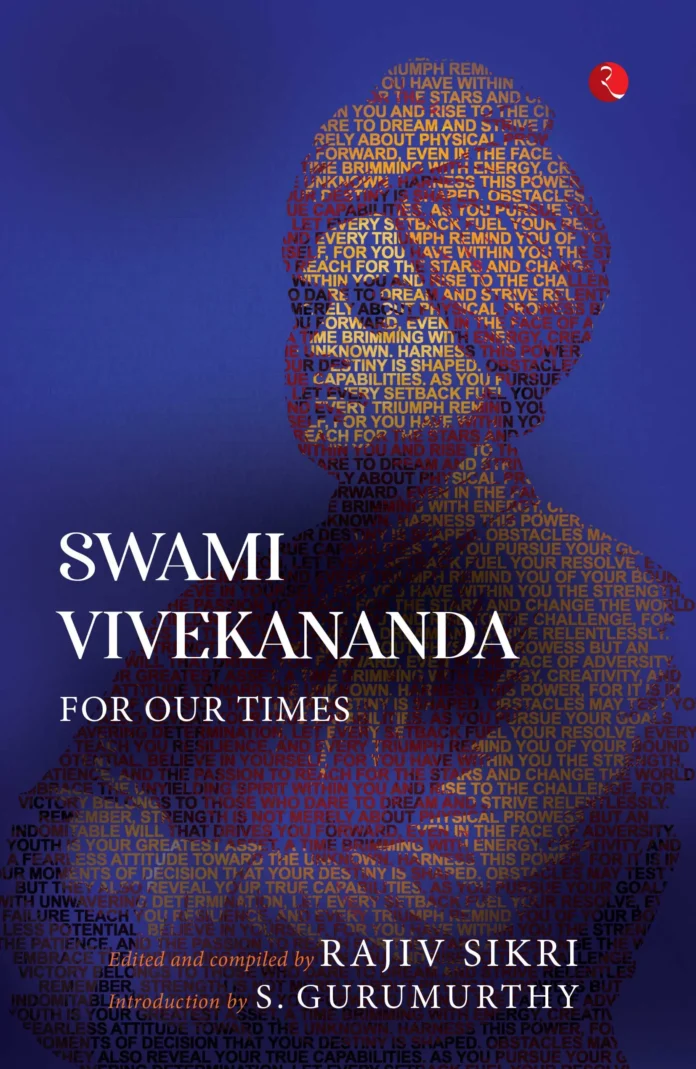
Excerpted from Swami Vivekananda for Our Times, edited by Rajiv Sikri. Published with permission from Rupa Publications.