

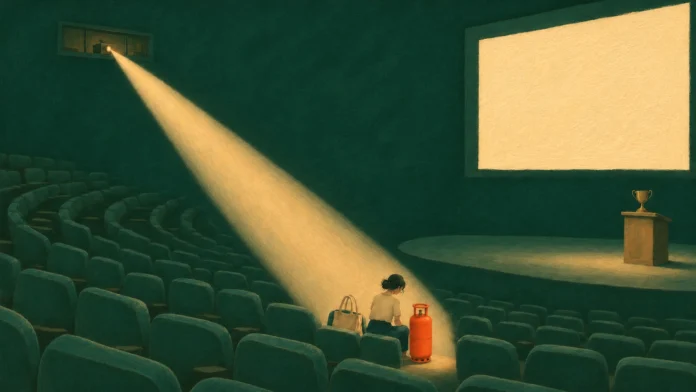
I work at a place that conducts masterclasses.
These are special occasions on which people considerably older than me gather to inspire my generation, which, for reasons I have never entirely understood, appears to haunt them.
Gen Z, we are called. A name that sounds less like a demographic category and more like the final stage of a particularly aggressive disease.
The masterclasses are organised with the best of intentions. Someone has presumably sat down in a meeting room and decided that the youth of today are in desperate need of inspiration, much as one might decide that a stray dog needs a bath. There is, however, a small difficulty. The people doing the inspiring seem to find the people being inspired absolutely baffling.
They have not told us this, naturally. Senior management is not in the habit of announcing its vulnerabilities over a conference call.
But one develops an eye for these things.
Mention Gen Z in a meeting and watch the faces.
The lips tighten. The brows furrow. A look of profound spiritual disappointment passes across the room, as though someone has just announced that the company will no longer be serving complimentary biscuits.
“Yaar, ye generation toh samajh hi nahi aa rahi.”
“Humne twenty saal pehle ek ad nikali thi, yaar. Kitni mehanat ke baad Cannes gaya. Inn logon mein wo josh nahi dikhta.”
One can almost hear the unspoken sequel: “Humne toh duniya badal di thi. Inhone abhi tak LinkedIn pe appreciate bhi nahi kiya.”
And so, a masterclass is arranged.
About 250-odd people join. Some sit in an amphitheatre, facing a projector and a speaker who has presumably been invited to impart the wisdom of several decades. Others appear on a screen, having joined the class online. There are people who have come to appease their immediate seniors, and some who are genuinely curious.
The class begins.
The slides read, ‘Keep pushing those boundaries.’
‘If you are offending the client, you know there is something powerful there.’
‘We must be willing to burn the midnight oil, fight for that one idea we believe in.’
Then we are told: “The industry will die if we do not bring the joy back into it.”
What I hear is that the industry is apparently dying because of me.
I am not entirely sure what I am expected to do with this information. Perhaps I should go home and apologise to the advertising gods. Perhaps I should work a little later, offend a client or two and restore the natural order of things.
But there is something else I wonder about.
How much fighting does one person have in them?
I spend a considerable part of my day fighting with the gas cylinder guy to deliver a cylinder on time. I am fighting for clean air in a city that seems to have given up on the idea of breathing. I am fighting traffic, rent, bills and the increasingly elaborate exercise of trying to have a reasonably comfortable existence. And somewhere in between all this, I am expected to come to work and find the energy to fight for an idea.
I am not opposed to fighting for good ideas. I would quite like to make something worth fighting for. But there is a difference between fighting because you believe in something and having to fight for every ordinary thing that should have been available to you in the first place. Perhaps that’s what they don’t understand.
We are not necessarily short of conviction. We are running out of things to spend it on.
The masterclass eventually draws to a close. And then comes the question from a leader everybody respects: “Let’s repeat one thing we learnt from this class.”
But here’s the thing: these are not masterclasses. They are master baits. The idea, apparently, is to teach us to be bold, think differently, challenge convention and have the courage to stand apart from the crowd.
With the greatest respect, my generation has been doing this without a PowerPoint presentation. We had no shame dancing our hearts out on TikTok, sometimes with the sort of conviction that suggested the rent depended on it. We fight with the Mumbai Police on Twitter to get our passports processed.
We publicly embarrassed ourselves on the internet when a pandemic brought the world to a standstill.
And now we have to attend masterclasses that teach us to be bold.
It is a little like inviting a man who has just escaped a burning building to a seminar on fire safety, and then asking him to applaud the slides.
Of course, the real problem is that we are not sufficiently impressed by the things that impressed them. This, I suspect, is the source of considerable anguish.
They remember an advertisement they made twenty years ago. Some were a simple template: it uncovered an obvious social truth, packaged it beautifully, and went to Cannes. They have been living off the memory ever since. I do not wish to be uncharitable. The advertisement may well have been excellent. There is, after all, much to learn from people who built things before the industry had the resources, platforms and conveniences we have today.
But Instagram did not exist then. Neither did the current arrangement in which every person with a phone, an internet connection and a ‘passing’ interest in human behaviour can broadcast an observation to several million people before breakfast. Social truths are no longer rare birds that descend upon advertising agencies once every five years, to be captured by a particularly gifted copywriter or strategist and displayed in a case study film. They are everywhere. In reels, in memes, in comment sections, in the extraordinary things people say when they forget that a brand might be listening. The world has simply become much harder to convince that you alone have noticed something.
They have spent years selling us things we could quite happily have lived without. They have premiumised everything that could be premiumised, from bottled water to the experience of sitting in a chair.
The trouble is that somewhere along the way, even our most ordinary aspirations acquired a premium version. And after all this, after years of convincing people to want more, buy more and pay more for the privilege of doing so, they look at young people and wonder why we seem so reluctant to follow their example.
The basic milestones of my adulthood have been upgraded to luxury experiences. Take a house, for instance. Building one with your own money was once a perfectly respectable destination. Now, apparently, a house is not quite enough. It must be in a particular postcode, in a particular neighbourhood, with a certain number of amenities, a clubhouse, a gym, a swimming pool and enough carefully curated facilities to ensure that you never actually have to leave the premises.
A home has become a ‘lifestyle proposition’.
Marriage is an expense category. Parenthood requires financial modelling. A holiday must be justified against the opportunity cost of not investing the money. The humble act of living in a city where one’s job exists has become an exercise in fiscal masochism.
We know what a good life can look like. We have seen a thousand versions of it on our phones before we have even brushed our teeth. We know where the nice houses are, what a comfortable childhood looks like, what a good holiday entails and what it means to have a career that offers both money and time.
What we have is an extraordinary catalogue of possibilities. What we have not necessarily been given is the purchasing power to select from it.
And then someone tells us that we lack ambition.
I am not saying they had it easy. Every generation has its own collection of horrors, and nostalgia is an unreliable witness.
But there is a peculiar arrogance in assuming that the path which worked for you must also be the path that everyone else ought to follow, regardless of whether the road still exists.
And perhaps this is what the masterclasses are really about.
Not inspiration, but reassurance.
The seniors need to believe that the world they built is still a world worth wanting. That the advertisements they made, the things they sold, the careers they pursued and the lives they modelled remain the correct answers to questions that have changed considerably since they last took the examination.
It must be unsettling to discover that the next generation does not want your life. It is even more unsettling when they have perfectly good reasons. Perhaps we don’t want to spend our lives proving that we can work harder than the person sitting next to us, or turn every hobby into a side hustle, every holiday into content and every personal achievement into a LinkedIn announcement. Perhaps we would like to have a house without having to spend the next thirty years paying for the privilege of occupying it.
Is it a sign of a generation that has lost its ambition? I don’t believe so.
It might simply be a sign of a generation that has started questioning the price of ‘prescribed ambition’.
When you tell us to think differently, have the grace to understand that we are indeed thinking very differently. And when you tell us that we must aspire to greatness, please understand that we might have a different definition of it.
Our ambitions might not be particularly Cannes-worthy ambitions. There is no obvious case study film in a young person wanting to sit in a park without checking their email. No prestigious jury is likely to hand out a Lion for a generation that would prefer a four-day workweek to a brand purpose workshop.
But there is a thought here, somewhere, and I offer it to the masters free of charge. You spent years teaching the world to want more. You gave us bigger dreams, better things to aspire to and newer definitions of what a successful life ought to look like. We are simply trying to figure out how to want less without having to earn more first.
So, sir, here is the one thing I learnt from this class. Some of us came to appease you, and some of us genuinely wanted to hear what you expect of us. But, with due respect, a whole generation does not want the same thing and it may not even want what you wanted.
Please, at the very least, let us afford time.