

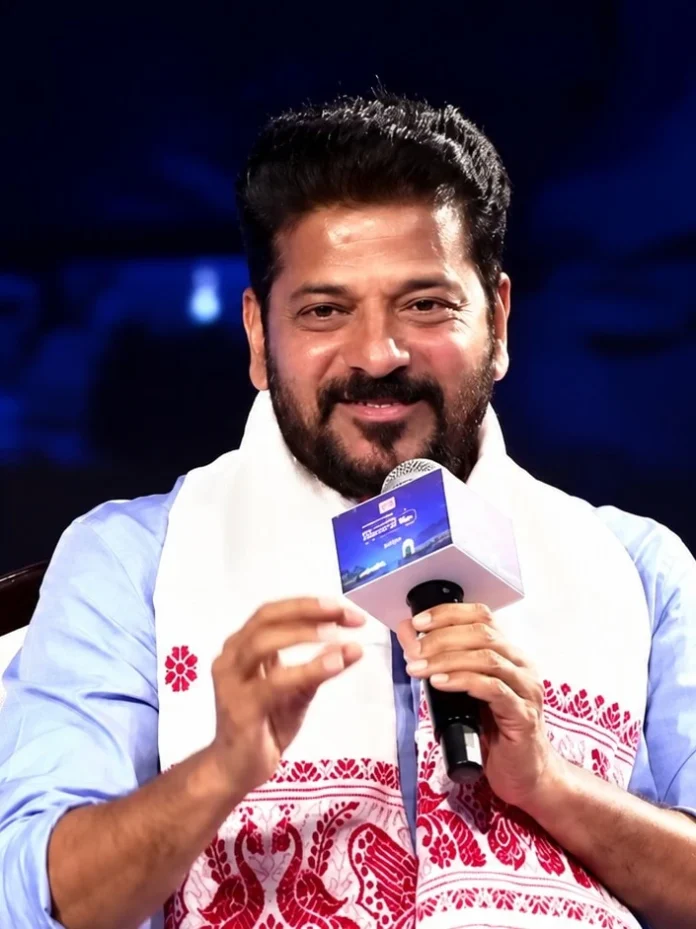
On Monday, Telangana Chief Minister Revanth Reddy of the Congress offered a theology of his own. Speaking at an event in New Delhi, he said, “We are Dravidians; they are Aryans. We are devotees of Lord Shiva, while they are devotees of Lord Ram.” He went on to call Bhagwan Shiv the God of the poor and Ram the God of the rich, adding, almost as an afterthought, that both are worshipped. The BJP, he alleged, had “stolen Ram”. The outrage was predictable. So was its end: by the next day, it had passed without consequence.
But on Gandhi Jayanti, one is drawn to something more profound. Mahatma Gandhi’s reported last words were “Hey Ram”. Today, a senior leader of the very party with which Gandhi remains so deeply associated tells us that Bhagwan Ram belongs to the rich, Bhagwan Shiv belongs to the poor, and Bhagwan Ram has been “stolen”.
And yet, there is silence. Would Gandhi have stayed silent if Bhagwan Ram — whose name was woven so deeply into his spiritual vocabulary — were reduced to a political symbol of the rich?
Perhaps that silence is the deeper story. Not merely what was said about Bhagwan Ram and Bhagwan Shiv, but how easily we have allowed our Gods to be dragged into the language of division: rich and poor, North and South, ours and theirs.
When did Bhagwan Ram become “rich”? When did Bhagwan Shiv become “poor”? When did centuries of shared worship, pilgrimage, philosophy and history get reduced to rich versus poor, North versus South, Aryan versus Dravidian?
This is not merely a theological provocation, and Hindus should not simply let it pass. It is an attempt to force a complex civilisational inheritance into the narrow binaries of contemporary politics, and to open yet another fault line among Hindus. Political projects have already divided Hindu society vertically, along sect and caste.
The Congress is now dividing Hindu civilisational symbols horizontally as well, turning Bhagwan Ram into the God of the rich and Bhagwan Shiv into the God of the poor.
It is a false dichotomy, one that reduces religious and civilisational traditions to crude socioeconomic categories.
A Hindu is not born into a “rich God” and a “poor God”. A Hindu inherits a sacred world in which the divine is worshipped by kings and commoners, in palaces and roadside shrines, in Kashi and Rameswaram, in Ayodhya and Tirupati, across languages, regions and centuries. A famous saying attributed to Guru Ravidas puts it simply: Man changa to kathauti mein Ganga — if the mind is pure, even a humble vessel holds the Ganga.
That is precisely why the Congress’s own history becomes relevant.
On 20 July 1950, India’s first Prime Minister, Jawaharlal Nehru, wrote to K.M. Munshi that he had been “feeling a little uncomfortable” at Munshi’s references to rebuilding the Somnath temple. “As a Government, we cannot undertake the building of any religious edifices,” he wrote. Through 1950 and 1951, he would return again and again to his discomfort with the state’s association with the temple’s reconstruction and consecration. That correspondence remains one of the clearest windows into how he saw the relationship between the secular state and Hindu civilisational institutions.
In March 1951, he wrote to President Rajendra Prasad: “I confess that I do not like the idea of your associating yourself with a spectacular opening of the Somnath temple.” In April, he told Munshi he was distressed that the ceremony was being seen as more or less a government affair. On 1 August 1951, after the consecration, he told the chief ministers that the inauguration, “with pomp and ceremony”, had created “a very bad impression abroad about India and her professions”, adding that Pakistan had made it a principal plank of its propaganda.
Prasad went ahead regardless, and took part in the consecration on 11 May 1951.
One can debate Nehru’s conception of secularism, and whether his caution was principled or excessive. But one thing is undeniable: the Congress tradition has had a long and complicated relationship with the public expression of Hindu civilisation.
The Congress cannot claim that the BJP has “stolen” Bhagwan Ram while pretending its own history with Ram is uncomplicated. In November 2017, campaigning in Gujarat, Rahul Gandhi declared, “I am a devotee of Bhagwan Shiv. Let them say whatever they want to say.” He has also publicly offered Ram Navami greetings. In December 2025, Maharashtra Congress leader Nana Patole said Rahul Gandhi was doing the work of Lord Ram, describing Ram as one who fought for justice for the oppressed and the deprived.
So which Bhagwan Ram is it?
When Revanth Reddy needs material for a political attack, Bhagwan Ram becomes the God of the rich. When another Congress leader needs a moral metaphor, Ram becomes the embodiment of justice. The problem is not that politicians invoke religion. The problem is that Hindus stay silent in the face of such mockery, and such selective political ownership of the same civilisational symbols.
In 2007, the Congress-led UPA government told the Supreme Court, in its Sethusamudram affidavit, that the Valmiki Ramayana and the Ramcharitmanas could not be treated as historical records that incontrovertibly established the existence of the characters and events they describe. The affidavit was withdrawn soon after. Whatever one makes of that episode, it is now part of the political record.
And it cost the Congress nothing. In the 2009 Lok Sabha election, in a country where Hindus are the overwhelming majority of voters, the party raised its tally by 61 seats, from 145 in 2004 to 206. If anything shows how little our silence costs those who belittle our faith, it is that.
Then there is Ayodhya. When idols were placed inside the Babri structure in December 1949, Nehru wanted them removed; his Uttar Pradesh Chief Minister, G.B. Pant, did not act on it. Decades later, the locks on what was then called the disputed structure were opened in 1986, under Rajiv Gandhi’s government. In October 1989, Rajiv Gandhi launched his election campaign from Faizabad invoking “Ram Rajya”; the shilanyas followed in November. Then, in January 2024, the Congress declined its invitation to the Ram Mandir Pran Pratishtha, saying religion was a personal matter and accusing the BJP and the RSS of turning the temple into a political project.
There is a legitimate debate to be had about where religious institutions and state power should meet. But if religion is personal, why is a Congress chief minister telling Indians which God belongs to the rich and which to the poor? And if Bhagwan Ram is too political for a temple inauguration, why was Ram Rajya once a fit political slogan?
Who gave the Congress the right to divide the Gods of a civilisation that has worshipped them together for millennia? Who decided that Bhagwan Shiv represents one class and Bhagwan Ram another? That one God belongs to the South and another to the North? That one is Dravidian and the other Aryan?
Hindu Gods are not electoral constituencies to be divided, categorised or claimed for political arithmetic. Bhagwan Shiv does not belong to the poor. Bhagwan Ram does not belong to the rich. Krishna does not belong to one caste. Vishnu does not belong to one region. Kashi does not belong to the North, nor Rameswaram to the South. Ayodhya is not the private property of any party, and Tirupati is not merely a southern institution. These sacred places and traditions have bound India together for centuries precisely because they were never confined to the political geography of the day.
The civilisation travelled with them. People travelled with them. Stories travelled with them. Pilgrimages travelled with them. And the Gods travelled with them.
The most troubling part is not even that such an argument is made. It is that we have grown so used to the political reduction of Hindu civilisation that we barely respond anymore, and when we do, it is a day’s outrage on X. Silence, repeated long enough, has created the impression that anything can be said about a dharma and a civilisation without consequence. First people were divided. Then communities. Then regions. Then histories. And now the Gods themselves: rich God, poor God, North God, South God, Aryan God, Dravidian God.
What comes next?
A civilisation that survived because its sacred traditions connected people across centuries, geography, language and social boundaries is now being explained in the vocabulary of electoral constituencies. That should concern every Hindu — not because politics should never discuss religion, but because political parties should not be allowed to manufacture divisions between Gods whom generations of Indians have worshipped together.
A Hindu does not walk into a temple and ask, “Is this the God of the rich or the God of the poor?” He seeks darshan, folds his hands, offers his prayer. Whether he stands before Bhagwan Shiv in Kashi, Bhagwan Ram in Ayodhya, Krishna in Mathura, Vishnu in Tirupati, or any of the countless forms in which the divine is known across Bharat, he is not entering a political constituency. He is entering a civilisation.
Perhaps that is the question Indians must finally ask: when will we, as a civilisation, break our silence as one?