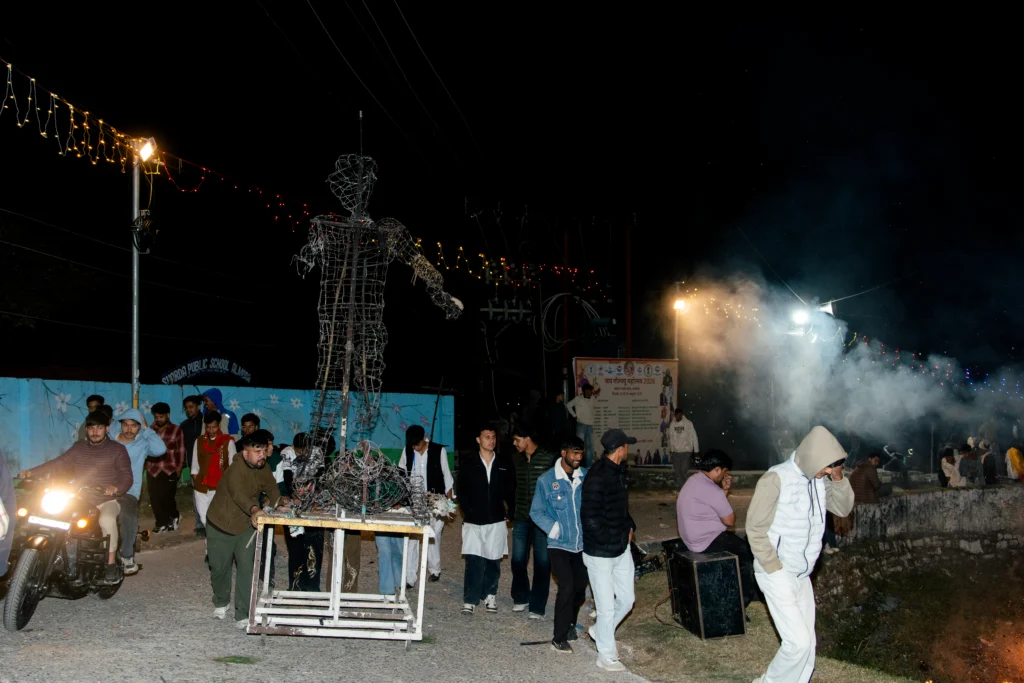

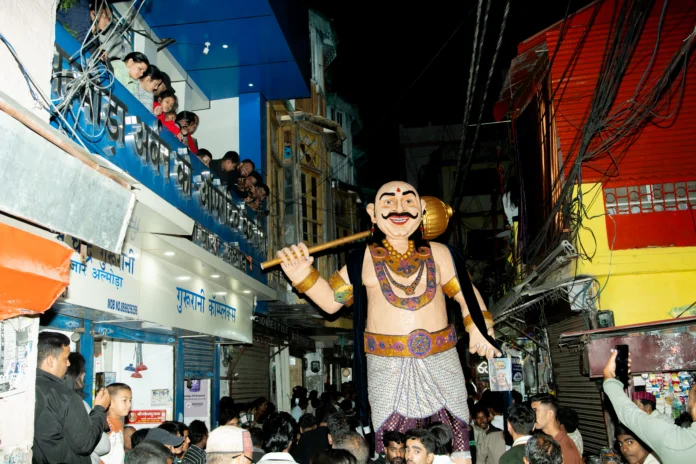
Every Dussehra, India burns Ravan, the ten-headed king of Lanka, for his defeat by Bhagwan Ram. Almora, in the Kumaon region of Uttarakhand, burns his family too. Its neighbourhoods each make an effigy of a figure from Ravan’s side—Meghnath, Kumbhkaran, Tadka, Dushan and others—and on the day they are brought together in a single procession and burned. This year there were 24, burned together near the Zoology Department of Almora College.
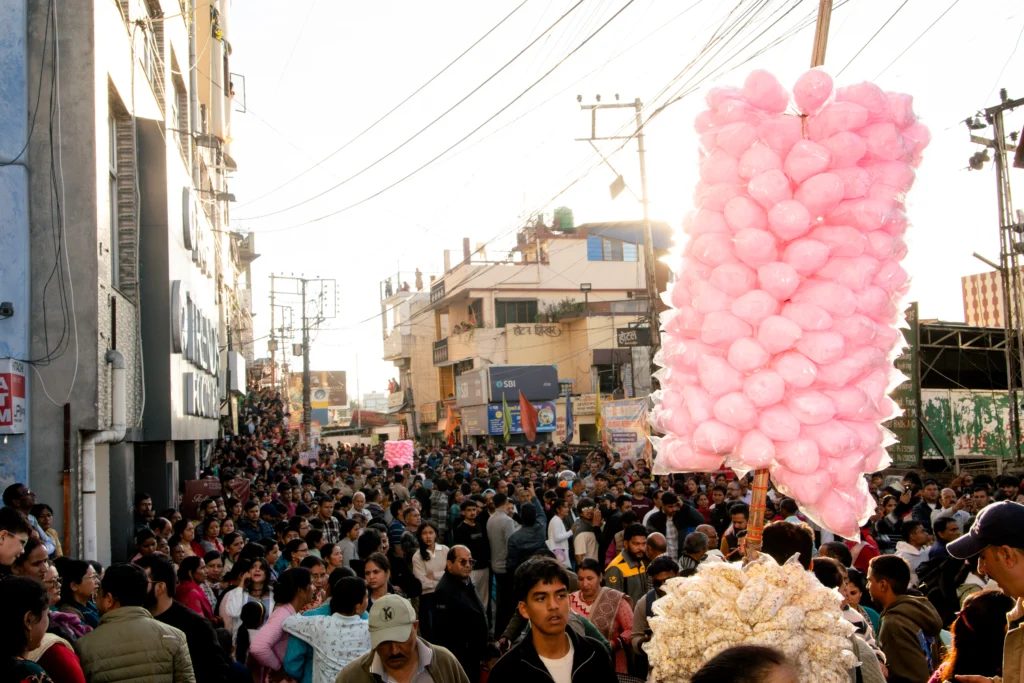
It wasn’t always so. Until 1975, only Ravan was burned. That year, residents of Murli Manohar Mohalla made an effigy of Meghnath, followed by Kumbhkaran from Johari Bazaar and Tadka from Laxmi Bhandar, a club in the same bazaar.
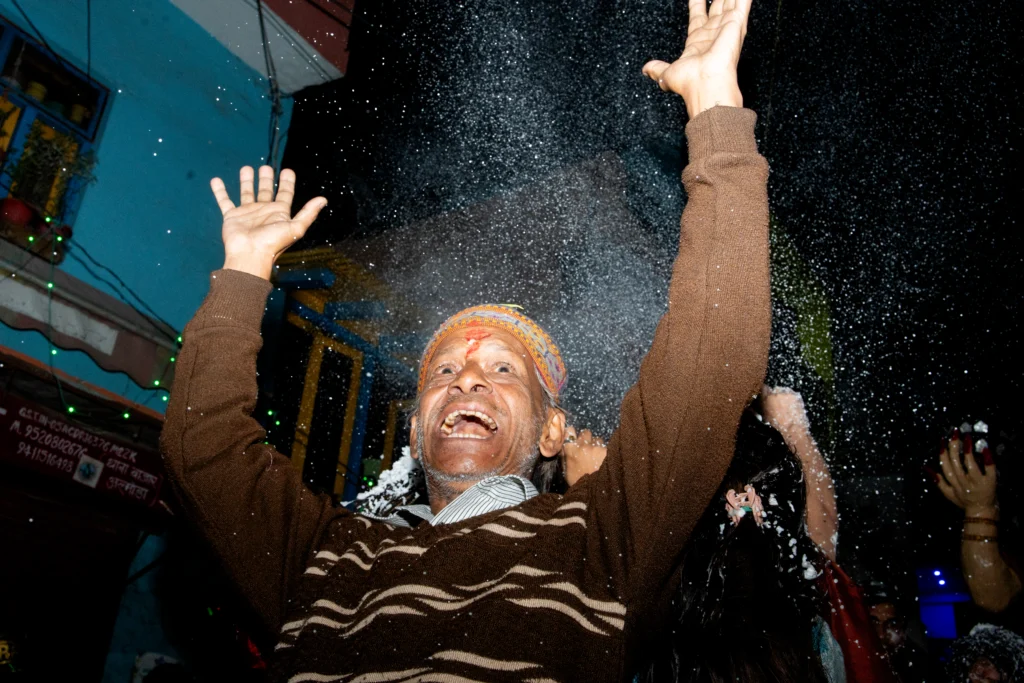
Watching them, I found myself thinking about what it means for Ravan to have ten heads. The heads have been read in many ways across traditions. In the familiar telling, Bhagwan Ram kills Ravan. But there is another way to understand his fall: as the work of his own ego and pride, a reminder that great learning and power can live alongside the weaknesses that bring a man down.
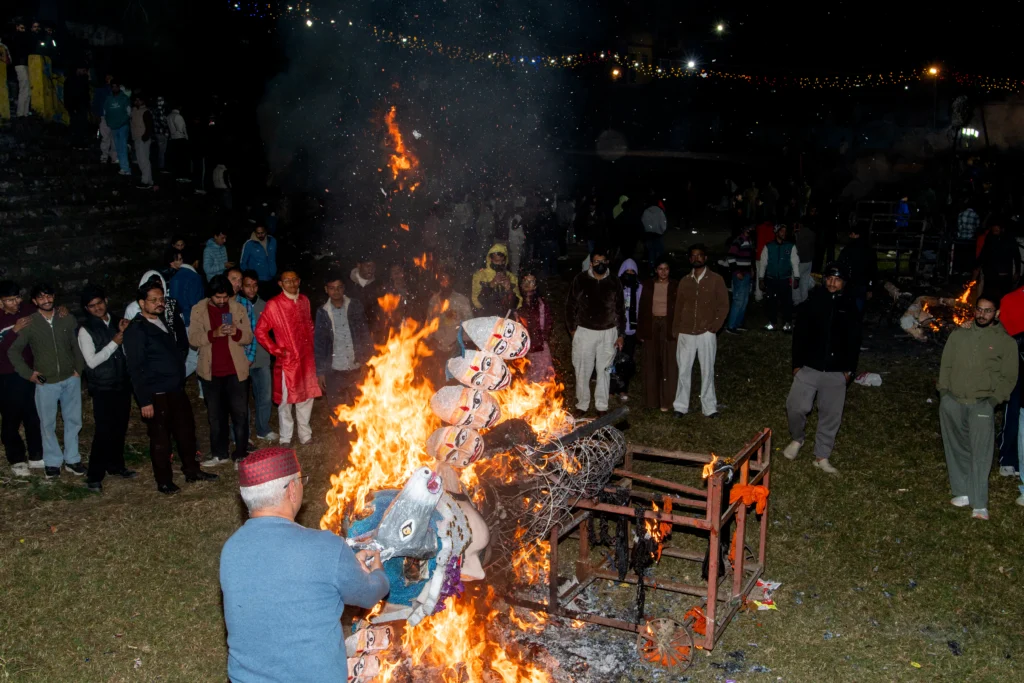
The effigies are not simply objects waiting to be burned. They are a town’s collective work: the skill of the people who build them, and a tradition carried forward by those who organise them, year after year.
Himali Gupta, who was born and raised in Almora and founded the clothing brand Oonnat, grew up watching the effigies “come alive”. She points to the artisans who “work through the cold nights, sometimes till four in the morning” to build them.
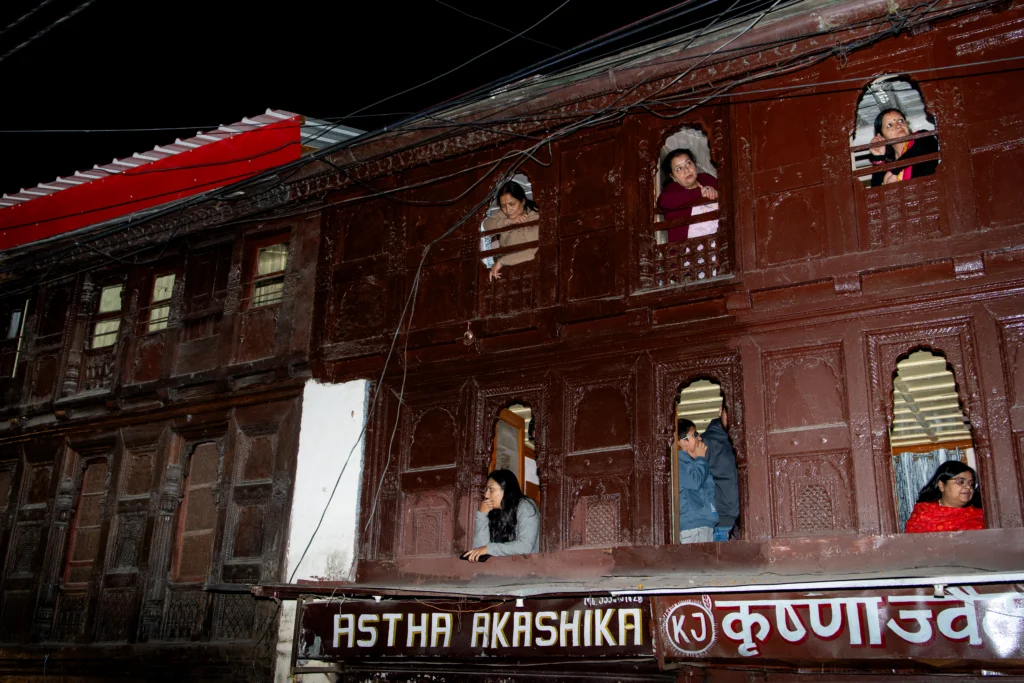
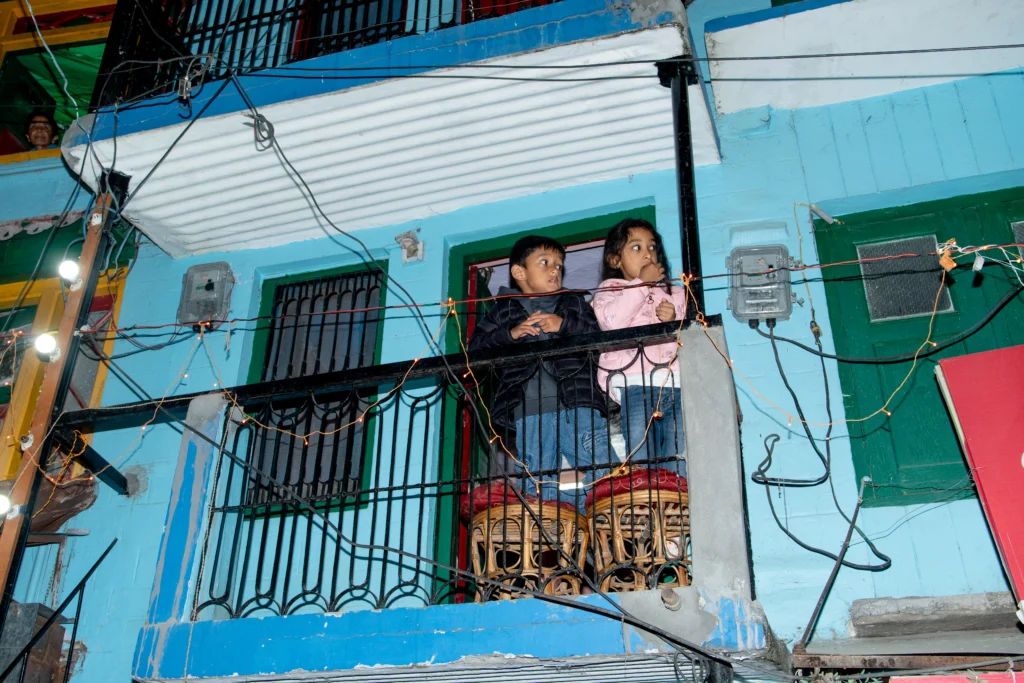
Traditions do not survive on their own; communities carry them. Across Uttarakhand, migration has emptied villages and reshaped rural life, and with it comes a worry about who will inherit skills like these. Gupta herself now lives in Gurugram. She missed a few years of the festival and wondered whether it had changed. “Coming back, I realised the spirit is still the same.”
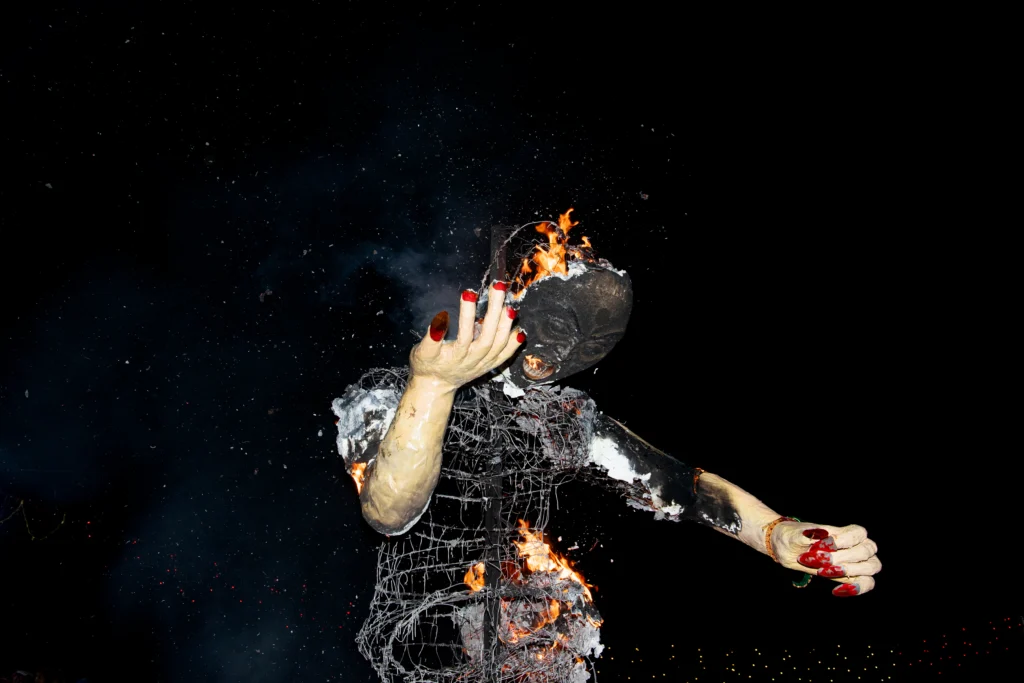
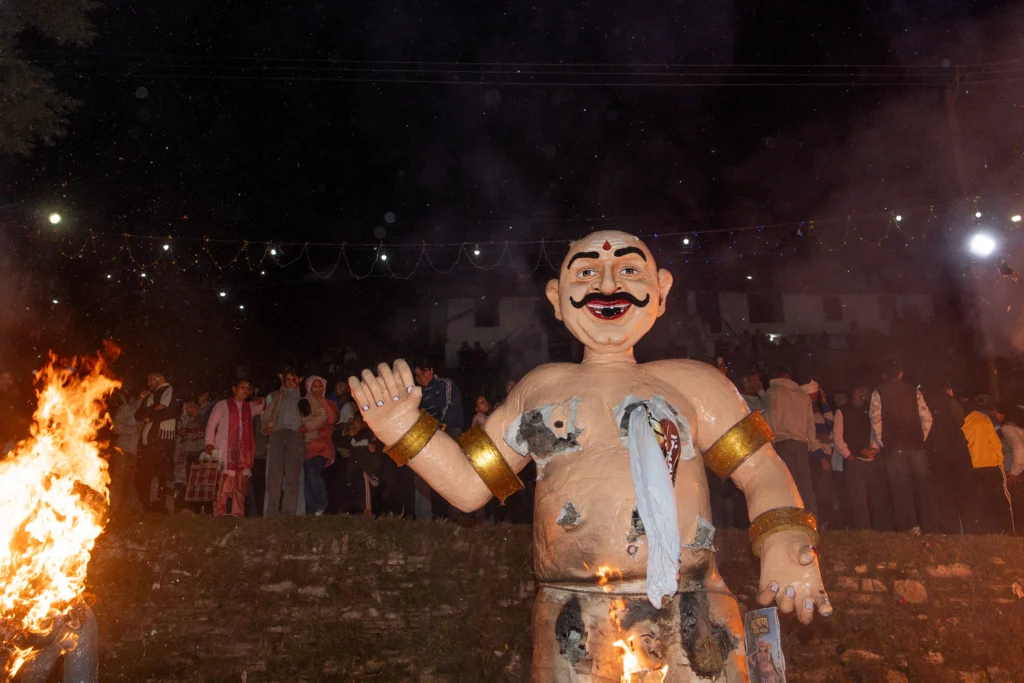
When the fire takes the effigies, it is easy to see only an old victory. Not everything goes into it: the hair and clothes are kept back to dress next year’s figures. And Almora is watching something else too: a town deciding, once more, that this is worth making again.