

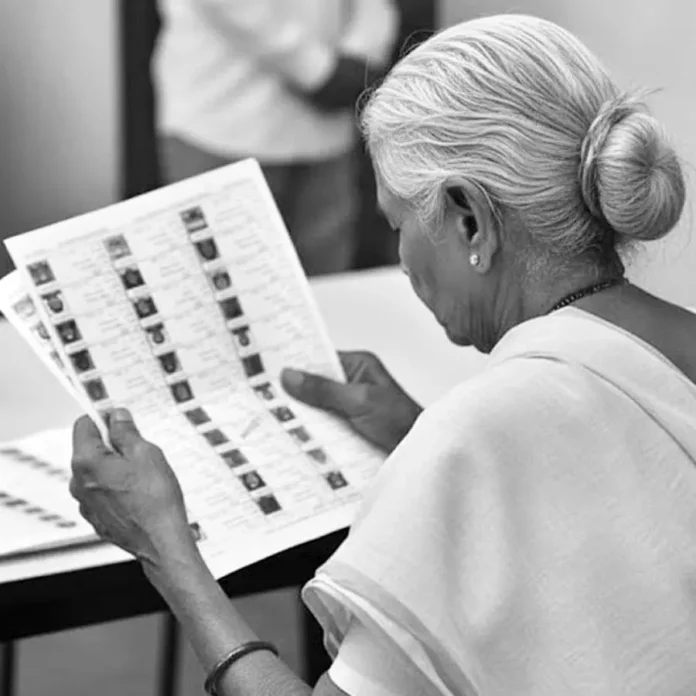
“130 million Indians removed from voting.” That is the line now travelling around the world, in thumbnails and captions and earnest threads. Let’s see where it comes from.
The Special Intensive Revision is the Election Commission’s door-to-door recheck of the voters’ list. The power to order it comes from Article 324 of the Constitution and Section 21(3) of the Representation of the People Act, 1950, and in May the Supreme Court upheld it, holding that the exercise serves the constitutional goal of free and fair elections. The last intensive revision was done in 2003. More than two decades of migration and urbanisation later, the rolls were out of date, which is one of the justifications the court accepted.
So what is the 130 million? The Election Commission’s own breakdown answers that: about 28 million names flagged as dead, 63 million as permanently shifted, 30 million as absent or untraceable, and nearly 10 million as registered in more than one place.
Read that again. Most of the number has nothing to do with death, and nothing to do with a purge. It is the record of a country on the move. The labourer who left Bihar for Surat a decade ago, the graduate who moved from Lucknow to Bengaluru, the woman who married into another district: each may sit on two rolls, or on the roll of a town they no longer live in. One person, one vote, one roll. That is the whole point of the exercise.
Nor is it a final deletion. The 130 million is a draft count, the Commission’s list of names to be checked. No name is to be struck off the draft roll without a notice, an inquiry and a chance to be heard. The drafts move. In the twelve states and union territories of the second phase, the final rolls held about 14 million more electors than the drafts had. And by the Commission’s count, about 23.7 million voters aged 18 to 28 have been added since the revision began.
There is a real question here, and the argument is stronger for admitting it. 30 million names sit in the “absent” category: people the officers could not find. Some moved and never told anyone. Some may be eligible voters who were not home that day, or did not have the right papers. If wrongful exclusion happens, it happens there, and that is where critics ought to be pressing. Two of the three Election Commissioners lodged 14 objections in 10 months over SIR decisions, and three UN Special Rapporteurs have written to India raising concerns about the deletions. These deserve answers, not sneers.
But “30 million names need checking” and “130 million Indians were removed from voting” are different sentences. Only the first is true.
Which is why the larger failure here is one of explanation. The Ministry of Information and Broadcasting and the Press Information Bureau exist to explain exactly this kind of exercise, to Indians first and to the world second. They have barely tried. The Commission did eventually issue a document calling the 130 million claim misleading, but by then the number had already gone round the world. There are few independent voices able to explain the revision without sounding like an IT cell, and in international media India’s version of its own story barely registers.
The pattern is familiar to anyone who scrolls: a caption built to alarm, a claim that sounds outrageous, a cycle of fear that the facts are too slow to catch. Whoever starts it, the gap it exploits is ours. A government that wins on security and diplomacy and then cannot explain its own voters’ list has left the explaining to others.
If a draft list can be turned into a purge in the world’s imagination, and in our own, the weakness is not in the roll. It is in our failure to explain it.