

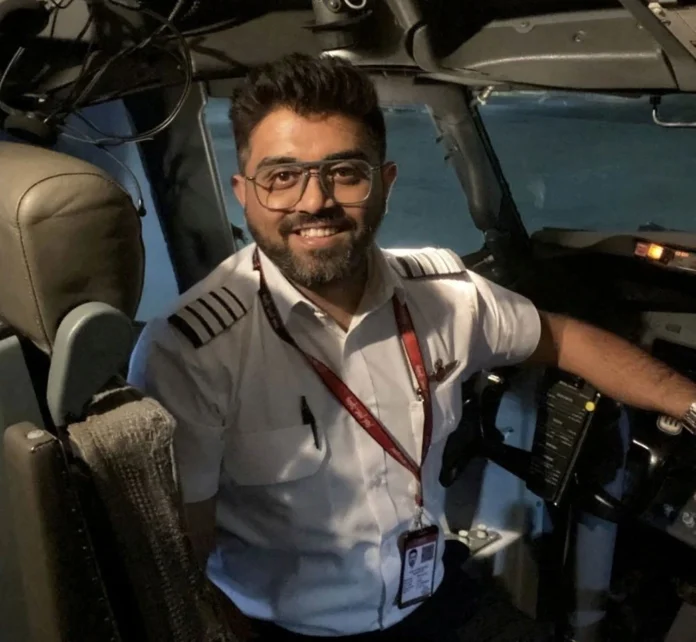
You must be aware by now of the flydubai flight case. If not: on 30 September, the co-pilot of a flydubai flight from Dubai to Tel Aviv, an Omani national, tried to take control of the plane. For this, he stabbed the captain, Smit Machchhar, an Indian national. “One of the pilots stabbed the other and apparently attempted to crash the plane with everyone on it,” Israeli Prime Minister Benjamin Netanyahu said. The plane dropped 17,400 feet in less than two minutes.
Stabbed and bleeding, Machchhar did not lose hope. Using what the Times of Israel called “the last moments of his energy”, he opened the cockpit door. Passengers and crew rushed in and got hold of the attacker, and two spare flydubai pilots on board landed the plane safely in Saudi Arabia. Everyone on board, mostly Israelis, was saved.
But if you had followed the international media that day, you would have had little idea of this. Reason? The way they write breaking news: reach for the softest word, and be slow to look back.
For instance, read the following and tell me what impression they leave on you.
“A ‘violent’ altercation between two pilots caused a FlyDubai aircraft traveling from Dubai to Tel Aviv to divert to Saudi Arabia,” CNN posted on X.
“Two pilots were wounded after they reportedly fought on board the plane they were flying from Dubai to Tel Aviv and which was forced to make an emergency landing in Saudi Arabia on Wednesday,” reported AFP.
“BREAKING: Flight from Dubai to Tel Aviv lands ‘safely’ in Saudi Arabia after ‘brawl between pilots’,” Sky News posted on X.
“Breaking news: A plane flying from Dubai to Israel was diverted after an altercation between the pilot and co-pilot, Israeli officials said,” The New York Times posted.
And lastly, the BBC: “Israel-bound flight diverted after fight between pilots.”
My eyes could trace “altercation”, “fought”, “brawl” and “fight”. But was it just this? The facts do not say so. A fight has two sides. Here, one man had a knife and the other was stabbed in the cockpit. One was the attacker, the other the victim. What could have happened if Machchhar hadn’t opened that door? All could have been killed.
Now compare those headlines with what a passenger told the Jewish Telegraphic Agency: “We saw the co-pilot stabbing the captain, and we pulled him out together with two other people.” No “altercation” there. No “brawl”. Just a man with a knife and a man bleeding in the cockpit.
Some will say the word “fight” first came from Israeli officials and Israeli media, and flydubai’s own statement called it an “altercation”. True. The first reports of any event are messy. But once Netanyahu said one pilot had stabbed the other and tried to crash the plane, the “fight” was over. A newsroom’s job is to get the story right, not just fast. And by then, the soft words had already done their work.
Why does a word matter so much? Because most people never click. For millions, those few words were the whole story. They learned that two pilots had a scrap. They never learned that a man with a knife nearly brought down a plane full of people, or that another man, stabbed and bleeding, stopped him.
What happened, and who was saved, was blurred, and the event was shown as if some small fight between two folks made the flight land.
30 September could have been a day of mourning. It wasn’t, because Smit Machchhar opened a door.