

On the night of 26 November 2008, Mumbai was not simply attacked; it was subjected to one of the most brutal acts of Islamist terror in India’s history. For nearly sixty hours, ten Lashkar-e-Taiba terrorists, trained, armed and directed from across the border, turned the city’s most familiar and cherished spaces—a railway station, hotel lobbies, a café, a hospital and a Jewish community centre—into sites of indiscriminate carnage.
One hundred and sixty-six lives were taken. More than three hundred people were wounded. But the enormity of 26/11 cannot be captured in statistics alone. It is etched into the lives of survivors who continue to bear the scars of that night, into the grief of families whose loved ones never returned, and into the memory of the brave officers and commandos who charged into the heart of the terror, fully aware that the mission could cost them their lives.
At Chhatrapati Shivaji Maharaj Terminus a nine-year-old girl named Devika Rotawan stood with her father, waiting for a train to Pune. She watched a young man with a large gun move through the crowd as if the right to decide who would keep breathing belonged to him alone. A bullet tore into her right leg. She collapsed and her father fell on top of her. She still sees the expression on the gunman’s face—not rage, but something colder and more terrible: pleasure. Eighteen years later the memory has not softened. She identified Ajmal Kasab in court, endured six surgeries, fought for a house that the Maharashtra government had promised her but for years did not deliver, and continues to speak of turning the wound into strength while still searching for steady work. Eventually, she petitioned the Bombay High Court, and the state allotted her a one-bedroom flat in Andheri West.
Inside the Oberoi, Apurva Parikh and his two closest friends were herded up a service staircase with other guests and forced to stand against a wall. The guns opened. His friends fell on either side of him. Somehow he turned his face just far enough that the bullet only grazed his neck. He lay beneath the weight of the dead, then hid for two nights in a plant room, surviving on sips of filthy water from an air-conditioning unit until commandos found him. He has said it is easy to survive and very difficult to live afterward—“like a dead man living.” The guilt of having invited those friends to dinner that night still sits in the room whenever he meets their widows.
Near Nariman House a civilian named Santosh Veer heard what he first thought were firecrackers from a cricket match. He and a friend picked up paving stones and threw them at the gunmen, keeping them trapped, he says, for nearly an hour. A grenade answered. Both of Veer’s thighs were torn open. Multiple surgeries later, the pain remains. Every year he organises a blood-donation camp at the same place, calling his continued existence a second life.
Hotel staff locked banquet doors, switched off lights, guided guests through kitchens and service corridors, and in several cases died doing so. Karambir Singh Kang, the general manager, was at a function away from the hotel when the Islamist attack began. Kang rushed back to the hotel, where his wife Neeti and two sons lived in a suite on the sixth floor. They hid in the bathroom but died because of the smoke and fire. Kang stayed in the hotel and supervised the rescue of guests even after he got to know that his wife and children had died. Railway announcers stayed at their microphones under fire, directing panicked crowds toward exits that still offered a chance. Ordinary people became the first line of defence because the planned response had not yet fully arrived.
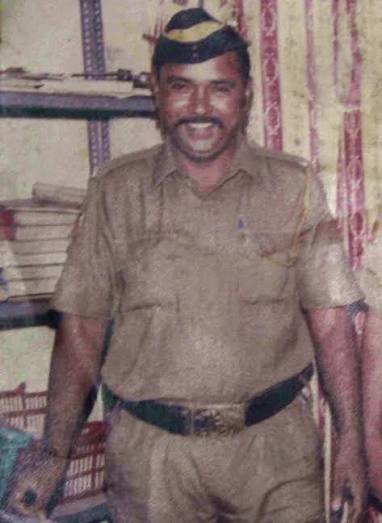
The Mumbai Police were that first line. Many officers ran toward automatic fire armed only with lathis or outdated rifles. ATS chief Hemant Karkare, Additional Commissioner Ashok Kamte and Senior Inspector Vijay Salaskar raced toward Cama Hospital the moment they learned terrorists were there. Their vehicle was ambushed in a narrow lane. They fired back, and a bullet from their vehicle wounded one of the terrorists in the hand. All three were killed. Assistant Sub-Inspector Tukaram Omble confronted Kasab and Abu Ismail at Girgaum Chowpatty. Armed only with a lathi, he charged, seized the barrel of Kasab’s AK-47, and held on while more than twenty bullets tore into him. His grip prevented the terrorist from firing freely and allowed other officers to overpower the only gunman captured alive. That single act of sacrifice gave investigators the living evidence that later exposed the full conspiracy. Other policemen—constables, sub-inspectors, drivers—fell at CST, near Cama Hospital, and across the city. Many had no specialised training for an urban siege of this scale. They simply refused to step back.
When the true scale of the assault became clear, the National Security Guard was mobilised from Manesar. Operation Black Tornado began. Marine Commandos and Army units supported the effort. NSG teams entered the Taj, the Oberoi-Trident and Nariman House under continuous gunfire and grenade attacks. Major Sandeep Unnikrishnan of the 51 Special Action Group led a team into the Taj. When a fellow commando was badly wounded, Unnikrishnan ensured his evacuation, then returned alone. According to NSG officials, his last words to his men were: “Do not come up. I will handle them.” He was killed clearing the way. Havildar Gajender Singh Bisht fell while storming Nariman House. Other commandos fought floor by floor for three days, rescuing hostages, clearing rooms, and absorbing the cost of every advance. The siege ended only on the morning of 29 November when the last terrorists at the Taj were neutralised.
These were not abstract acts of duty. Officers with families, commandos in their thirties, policemen who had never faced automatic weapons in a city street chose to move forward when every instinct and every piece of equipment argued against it. Six of them—Karkare, Kamte, Salaskar, Omble, Unnikrishnan and Bisht—received the Ashoka Chakra posthumously. Many more received lesser recognition or none at all. The city survived because they did not wait for perfect conditions.
Eighteen years later the bullet marks near Nariman House remain visible. Survivors still flinch at the sound of firecrackers. Compensation and medals arrived; the deeper wounds did not close. The capture of Kasab, the extradition of an accused conspirator, and the strengthening of counter-terror forces are real outcomes of that night’s sacrifice. Yet the central truth is simpler and more painful: ordinary people, local policemen, and elite commandos stood in the path of carefully planned terror and paid with their lives so that others could walk out.
This is what 26/11 left behind — not only the names of the dead, but the unfinished lives of those who survived and the permanent debt owed to those who did not. The night lasted sixty hours. The memory, and the responsibility it imposes, has no end.
