

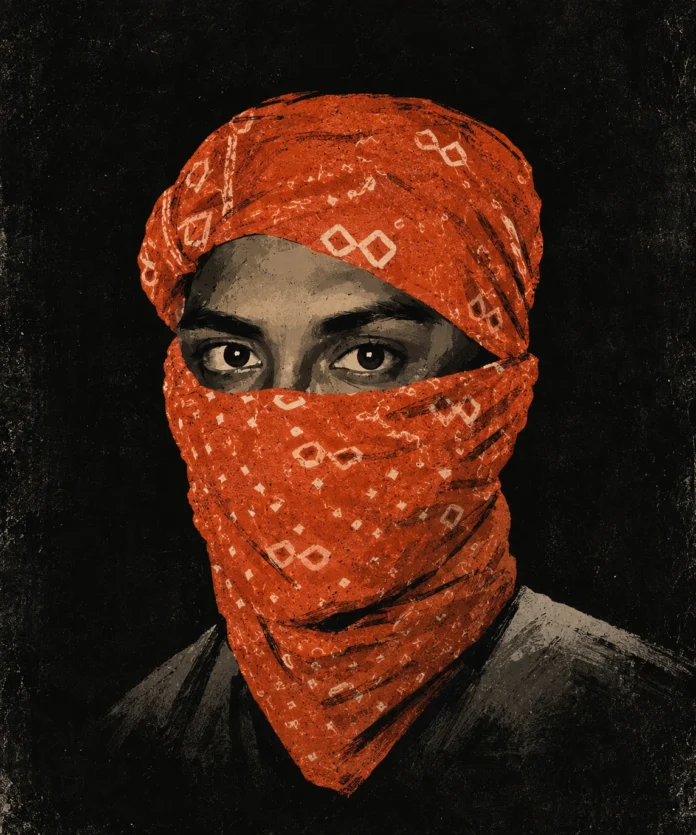
What exactly does a girl have to do to be allowed to come home safely?
Study. Come back before dark. Stay on the main road. Avoid deserted places. Do not travel alone. Do not sit with a male friend. Do not wear anything that might attract attention. And if something still happens, the first questions are about where she went, why she went there, whom she was with, and why she did not avoid the situation.
At some point, society has to stop asking women how carefully they walk through the world and start asking why certain men believe they are entitled to control that walk. What unfolded in Jamui, Bihar, on September 19 is disturbing precisely because the victims were doing nothing extraordinary.
Two Class 10 students, a minor girl and her male classmate, were returning home on a scooter after coaching classes when a group of youths stopped them on a relatively deserted stretch of road in the evening. What followed was captured on video. The boy was grabbed by the collar, slapped and manhandled. The girl was surrounded and groped. The videos show the two pleading with the group and trying to get away while some of the youths continued to chase and harass them. The ordeal reportedly lasted 15 to 20 minutes.
That the attackers filmed it themselves makes it even more disturbing. The teenagers were not merely assaulted; their humiliation was deliberately recorded, and the two were threatened against reporting it. No complaint was filed, and the matter reached the public only after the videos began circulating on social media on September 21.
That sequence raises an uncomfortable question: why does an incident involving minors have to go viral before the machinery of the state moves visibly and urgently?
After the videos surfaced, police registered an FIR under relevant provisions of the Bharatiya Nyaya Sanhita and the POCSO Act. About seven people were identified from the footage, three were initially arrested, and a Special Investigation Team was formed to trace the rest. The National Commission for Women and the Bihar State Commission for Women also took suo motu cognisance of the case.
The online circulation added another layer of harm. Bihar Police later registered cases against around 120 social-media profile holders for allegedly circulating material that revealed the minor girl’s identity. This matters: recording an assault is one wrong; turning a minor’s humiliation into internet content is another.
On September 22, police said the alleged main accused, Nandan Yadav, was shot in the leg in an “encounter” while officers were trying to arrest him. According to the police, he opened fire and tried to flee. That is the police’s version. Another accused was reportedly injured separately.
Much of the outrage over Jamui, on social media and in some headlines, has described what happened as “moral policing.” The phrase is used often in India, particularly when a boy and a girl are involved. The phrase makes criminal violence sound like an extreme form of social disapproval, as though the perpetrators were merely enforcing a conservative code and happened to cross a line. But there is a fundamental difference between disapproval and violence.
A person may disapprove of two young people travelling together. Someone may hold conservative views about relationships. They are free to hold those opinions. What they are not free to do is surround two minors on a public road, demand explanations, decide whether they are “allowed” to be together, use force, touch a girl against her will, film her humiliation or stop the two from leaving.
So let us ask plainly: who gave anyone the right to stop two strangers on a public road? Who gave them the right to demand where they were going? Who gave them the right to decide whether they should be together? And who gave them the right to use violence when the two did not comply?
This is why reducing such an incident to “moral policing” is dangerous. It makes the perpetrators look like overzealous guardians of society rather than people accused of serious offences. It shifts attention from what they allegedly did to what the victims were supposedly doing.
That the victims were a boy and a girl does not change this.
The police response also leaves a question that should not disappear beneath political arguments and social-media outrage: how many such incidents never become visible because nobody records them, nobody uploads them, and nobody happens to be watching?
The Jamui incident was recorded. The recording surfaced. The accused could be traced from it. Countless victims have no such evidence. They are left with fear, humiliation and trauma, while those responsible simply walk away.
Political parties will use Jamui to attack one another. The government will highlight arrests; the opposition will question law and order. That debate is inevitable. But the victims’ suffering should not become another political prop. The real question is much simpler: can an ordinary girl travel home without calculating the odds of being attacked by a group of men?
As long as the answer is uncertain, claims about women’s safety remain only claims.
The men who stopped those students were not protecting morality. They were using violence to impose an authority nobody had given them.
That needs to be said bluntly.
A girl does not lose her right to safety because she is outside. A boy does not lose his right to dignity because he is with a female classmate. And no stranger gets to sit in judgement over either.