
ये यथा मां प्रपद्यन्ते तांस्तथैव भजाम्यहम्।
मम वर्त्मानुवर्तन्ते मनुष्याः पार्थ सर्वशः।।
Whoever resorts to Me in any manner, in the same manner do I favour them; beings experience Me alone in different ways, O Arjuna
- Gītā 4.11
Bhagavān is commonly known as ‘भक्तवाञ्छाकल्पतरु’ (wish fulfilling tree or Kalpavṛkṣa )among his devotees.
What more to say he is the very self of every being: अहमात्मा गुडाकेश सर्वभूताशयस्थितः -10.20 Gita
Bhagavān doesn’t impose himself upon anyone and respects the spiritual inclinations of people who tread towards him .
राम सदा सेवक रुचि राखी। बेद पुरान साधु सुर साखी।।
रुचीनां वैचित्र्यादृजुकुटिलनानापथजुषां
नृणामेको गम्यस्त्वमसि पयसामर्णव इव।।
Just as all rivers, taking different straight or crooked paths, finally merge into the ocean, so too, O Lord, all the various paths (that people follow, according to their different tastes and inclinations, lead only to You.
- Śivamahimnaḥstotram
Therefore Śaṅkarācārya , while commenting upon Gita 9.29 describes the nature of Bhagavān in this manner
अग्निवद् अहम् दूरस्थानां यथा अग्नि: शीतं न अपनयति समीपम् उपसर्पताम् अपनयति तथा अहं भक्तान् अनुगृह्णामि न इतरान्
“I am like fire. Just as fire does not remove the cold for those who stay far away, but removes it for those who draw near, so do I bestow grace upon my devotees and not upon others.”
Such a God is said to be devoted to his devotees .
भगवान् भक्तभक्तिमान्- Bhāgavata Purāṇa 10.86.59
It assumes forms as per devotion of the devotees.
Hence while contemptlating upon the nature of the divine our texts declare :
अयं ब्रह्मा शिवो विष्णुरयमिन्द्र: प्रजापति।
अयं वायुरयं चाग्निरयं सर्वाश्च देवता:॥“
Suta Samhita 2.10.36
(This ātman is Brahma, Shiva, Vishnu, Indra and Prajāpati. It is Vāyu, Agni and all the devtās.)
When such a God ,which is the subject matter of the Vedas, appeared in the form of Rāma, the Vedas emerged in the form of Rāmāyaṇaṃ via the poetry of Sage Vālmīki :
वेदवेद्ये परे पुंसि जाते दशरथात्मजे ।
वेदः प्राचेतसादासीत् साक्षाद् रामायणात्मना।।
We all are aware of the plot and characters of the epic . This is not the ocassion to talk about them in detail . Whats worth paying heed to is the adherence of Rāma, the hero of the epic, to the principle we discussed above.
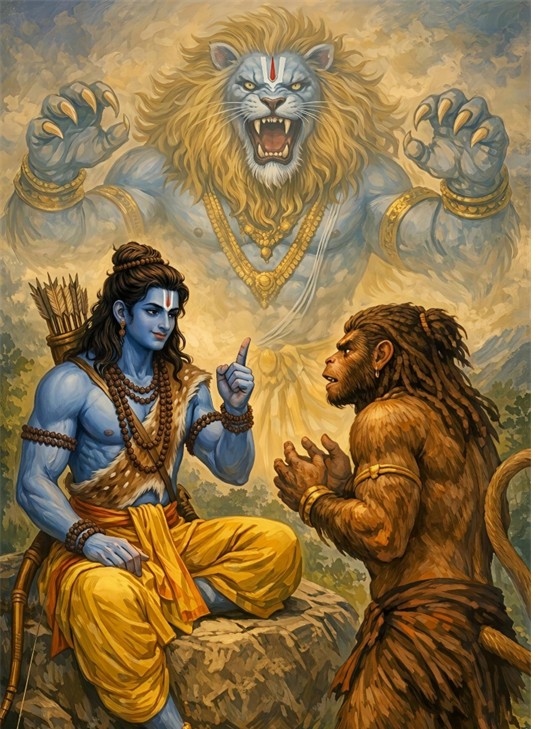
Mired in despair, anxious about survival, Sugrīva sees a Meghaśyāma Rāma with jaṭāmukuṭa on head, robes of sages on body , quiver hanging down the waist,and a divine bow in hand. The gloom vanishes, hope is revived and finally he takes refuge in Rāma uttering these words :
तव प्रसादेन नृसिंह राघव
प्रियां च राज्यं च समाप्नुयामहम्।
तथा कुरु त्वं नरदेव वैरिणं
यथा निहंस्यद्य रिपुंममाग्रजम्।। Vālmīki Rāmāyaṇaṃ 4.5.31।।
O Narasimha Raghava! It is only by your grace that I can reclaim my wife and my kingdom. O God among men! Please make such an effort so that I may be able to slay my enemy, my elder brother (Vali).
We all know what happens thereafter. The simian who had no place to hide becomes the king of all Vānaras of the world. Not only this , the forest dweller becomes one of the main advisors of Rāma in his campaign against Rāvaṇa, the villain of the epic.
One day , on the shores of the ocean, comes a man , seeking refuge in Rāma, addressing himself as younger brother of Rāvaṇa. His name was Vibhīṣaṇa.
Like any vigilant minister Sugrīva anxiously rushes to Rāma informing about arrival of his enemy’s brother and the cons of accepting him. After listening to all of his advisors and seeing Sugrīva in anxiety again , Rāma said something unusual:
पिशाचान् दानवान् यक्षान् पृथिव्या चैव राक्षसान्।
अङ्गुल्यग्रेण तान् हन्यामिच्छन् हरिगणेश्वर।।
O’ Sugriva, If I wish to, I can destroy all pishachas, Danvas, Yakshas, and Rakshas on earth with my nail.
Vālmīki Rāmāyaṇaṃ 6.18.23
A normal prince won’t ever boast about fighting with his nails. If we say that Rāma is exaggerating his strength poetically then the declaration of a sage like Valmiki about Rāma being सत्यसन्ध:/ सत्यवाक्य:/ सत्यपराक्रम: will fall flat.
Now go back to the scene where Sugrīva took refuge in Rāma and pay attention to the words he uttered at that time : ‘नृसिंह’ राघव.
Now connect the dots keeping in mind the principle set out at the onset of this piece .
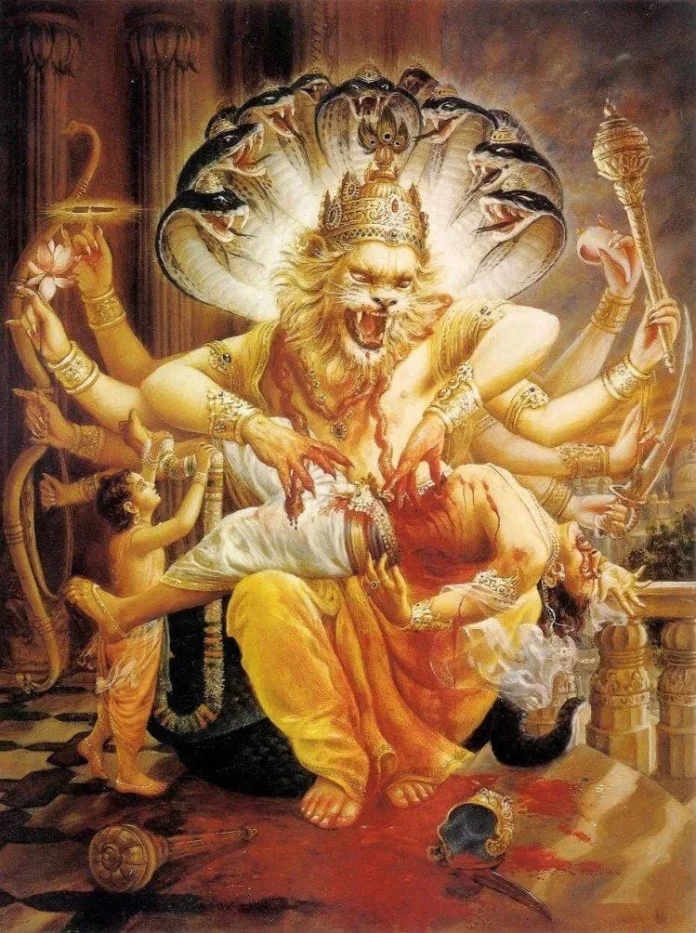
Vālmīki is establishing oneness of Rāma with Nṛsiṃha. It’s Nṛsiṃha who slayed myriads of asuras along with Hiraṇyakaśipu just with the help of nails. Rāma is merely reminding Sugrīva about his divinity and supremacy. The destructive pastimes of Nṛsiṃha are very well documented in Pauranik literature. Staying true to his nature the Nṛsiṃha Rāghava goes on to destroy 18,000 elephants, 10,000 chariots, 14,000 horses, 2,00,000 foot soldiers of enemies in 1.5 hours.
And after doing all this he says: एतदस्त्रबलन् दिव्यं मम वा त्र्यम्बकस्य वा.
This divine strength of weapons belongs either to me or to the Three-Eyed Lord (Shiva)
- Vālmīki Rāmāyaṇaṃ – 6.93
This strengthens the contention that Rāma and Nṛsiṃha are similar in essence.
Nṛsiṃhatāpinyupaniṣat an upaniṣat on Nṛsiṃha very clearly establishes oneness of Śiva and Nṛsiṃha by addressing Nṛsiṃha as विरूपाक्षं शङ्करं नीललोहितम् ॥…
उमापतिः पशुपतिः पिनाकी ह्यमितद्युतिः ।
All these are epithets of Śiva. This upaniṣat has been cited by commentators like Shankara in their bhashyas.
That’s why Nṛsiṃha Purāna says that Nṛsiṃha is pleased with crores of homas in Śiva temple. The lord pleased in this way destroys all calamities of the masses:
शङ्करायतने चापि कोटिहोमं नराधिप।
कारयेत् संयतैविप्रै: सभोजन सदक्षिणै: ।।
कृते तस्मिन्नृपश्रेष्ठ नरसिंहप्रसादत: ।
उपसर्गादिमरणं प्रजानामुपशाम्यति।।
Chapter 127. 51-52।।
Like Śiva , Nṛsiṃha too is depicted with a third Eye in murtis. The same is confirmed by these verses of नृसिंहकवच in ब्रह्माण्डपुराण
सर्व सम्पत्करं चैव स्वर्गमोक्षप्रदायकम् ।
ध्यात्वा नृसिंहं देवेशं हेमसिंहासनस्थितम् ॥ २॥
It bestows upon one all opulences and can give one elevation to the heavenly planets or liberation. One should meditate on Lord Narasimha, Lord of the universe, seated upon a golden throne.
विवृतास्यं त्रिनयनं शरदिन्दुसमप्रभम् ।
लक्ष्म्यालिङ्गितवामाङ्गं विभूतिभिरुपाश्रितम् ॥ ३॥
His mouth is wide open, He has three eyes, and He is as radiant as the autumn moon. He is embraced by LakShmIdevI on his left side, and His form is the shelter of all opulences, both material and spiritual
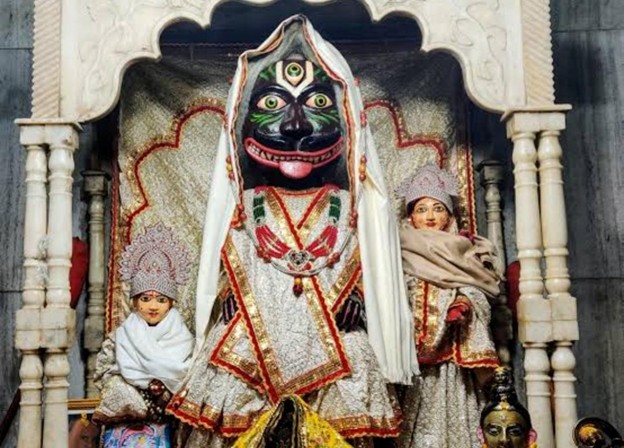
It’s not a mere coincidence that the चतुर्दशी तिथि belongs to Śiva as said the Puranas and Nṛsiṃha too appeared on चतुर्दशी .
Now again go back to Rāma’s words after causing destruction.
In the Araṇyakāṇḍa (third book) of the Rāmāyaṇaṃ Rāma slays 14,000 rākṣasas in the course of an hour a half, and liberated the forest from the terror of khara
अर्धाधिकमुहूर्तेन रामेण निशितैश्शरैः।।3.30.34।।
चतुर्दशसहस्राणि रक्षसां भीमकर्मणाम्।
खरदूषणमुख्यानां निहतानि महाहवे।।3.30.35।।
At the start of the war the author says
रूपमप्रतिमं तस्य रामस्याक्लिष्टकर्मणः।
बभूव रूपं क्रुद्धस्य रुद्रस्येव पिनाकिनः।।
Valmiki Ramayana 3.24.26।।
Rama, who is unwearied in action and who is of an incomparable (lovely) form, looked ferocious like the wielder of Pinaka (Lord Siva).
When the war ends he doesn’t forget to add:
स पपात खरो भूमौ दह्यमानश्शरानग्निना।
रुद्रेणेव विनिर्दग्धश्वेतारण्ये यथान्तकः।।3.30.27
Just as Yama was burnt by Rudra’s fire(from his eyes) in Swetaranya, Khara collapsed on the ground consumed by the fire of Rama’s arrow.
Destruction, Śiva, Rāma (Viṣṇu) … The poet tried to drop hints about the real nature of his hero , as we discussed before
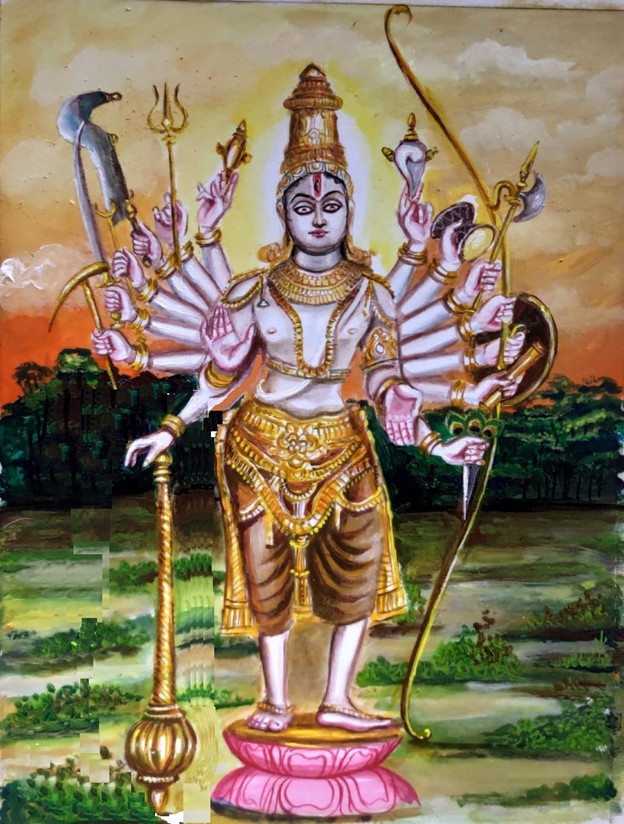
This destructive form of Rāma too has a third eye in iconography. This form is called the Kharāntaka. It’s depicted with 16 arms and a third eye like Śiva and Nṛsiṃha.
This form is worshipped in Irumpanam Makaliyam Sree Rama Swami temple. It is located at Irumpanam near Tripunithura in Ernakulam district, Kerala.
All of these pramanas from Ramayana establish oneness of Rāma with Nṛsiṃha and the tradition to believes it.
Before we conclude let’s have a look at this stuti of Rāma attributed Hanumān
Notice the second last word of the second half of every verse. Write these words down respectively. You get उग्रं वीरं महाविष्णुं ज्वलंतं सर्वतोमुखम्। नृसिंहं भीषणं भद्रं मृत्युर्मृत्युम् नमाम्यहम्।।
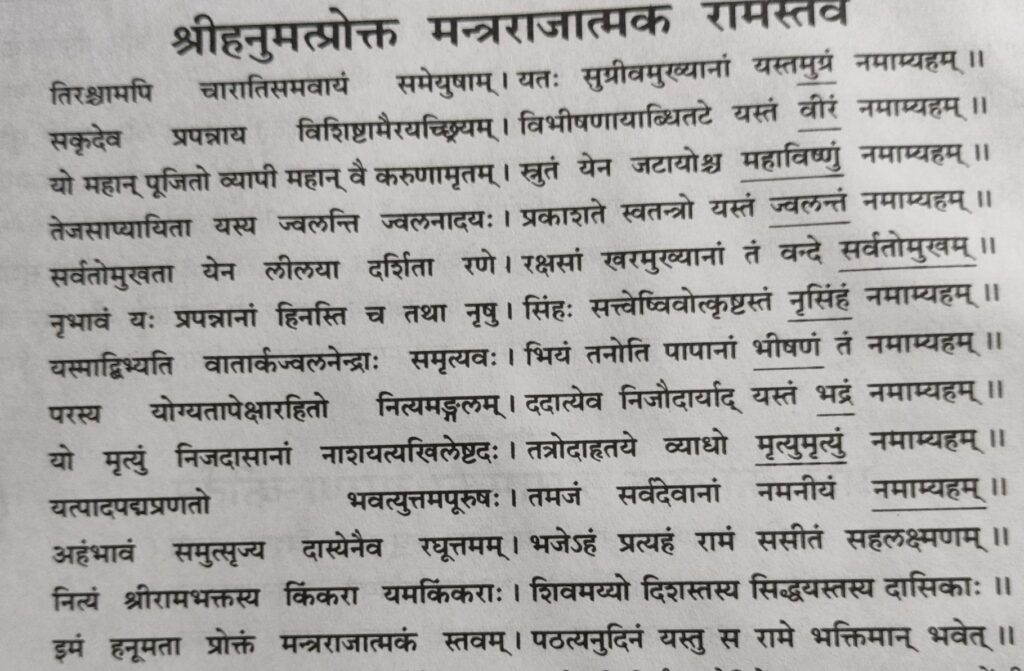
This is the मंत्रराज of Nṛsiṃhatāpinyupaniṣat. It has certain rules and regulations as to its chanting in the tradition, which must be respected for the efficacy of the mantra. But this stuti of Rāma can be sung by everyone and it has the great मंत्रराज of नृसिंह embedded in it.
We saw how deftly the Ādi Kavi took the Nṛsiṃha tattva to every home via his poetry
As one would say as per the trend of our times –‘ This was the peak detailing by the poet Valmiki. ‘
With this we put our words to rest .
Śubha Nr̥siṃha Jayantī