

Something very significant happened in Tamil Nadu in the first week of April 2026 and you aren’t aware of it. On the 6th of April, 2026, in the small coastal town of Kalpakkam, sixty miles south of Chennai, the Prototype Fast Breeder Reactor achieved criticality. That is to say, a nuclear chain reaction became self-sustaining inside a 500-megawatt reactor designed, engineered, and built entirely by Indians, with components from over 200 Indian companies, under conditions of near-total technological isolation imposed by the very nations that had spent 50 billion dollars failing at the same thing.
Read that again, if you need to. The nations that denied India the technology could not make it work themselves. The nation they denied it to did. If irony were a fuel source, India would not need thorium at all. Most men plan in quarters. Politicians plan in election cycles. Homi Jehangir Bhabha planned in geological time.
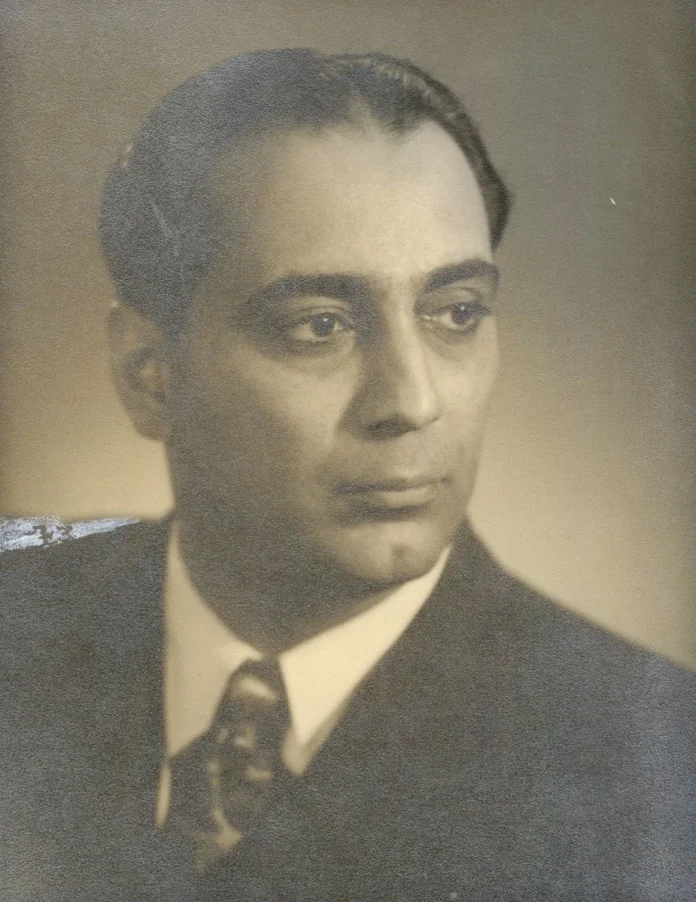
In November 1954, Bhabha stood before a conference in New Delhi and presented a three-stage nuclear power programme for a country that could barely feed itself. Only seven years had passed since we attained independence from the British. 80% of our people lived in poverty. Life expectancy was 32. Most Indians could not read. The nation’s industrial output was, to use a technical term, negligible.
And here was this Parsi physicist, a man who had been nominated for the Nobel Prize, who had calculated the cross-section of electron-positron scattering at Cambridge (still called ‘Bhabha Scattering’ in every particle physics textbook on earth), who painted well enough to win prizes at the Bombay Art Society at 17, who once wrote to his father from Cambridge in a letter of such burning eloquence that it deserves to be quoted alongside the great declarations of vocation: ‘Physics is my line. I know I shall do great things here. For each man can do best and excel in only that thing of which he is passionately fond’.
And so here was this man, standing before Jawaharlal Nehru, and saying, in effect: India has almost no uranium. But it has a quarter of the world’s thorium. And I know how to turn that thorium into 400 years of energy. Yes, it will take three stages. Yes, it will take decades. But it will work.
The sheer distance between India’s 1954 reality and Bhabha’s 1954 vision is the kind of gap across which only genuine greatness can build a bridge. Lesser men would have been laughed out of the room. Bhabha was given the Atomic Energy Commission.
He started the Tata Institute of Fundamental Research in the room where he had been born. That detail alone is worth a novel. India’s nuclear programme began in a man’s childhood bedroom, funded by a Tata trust, and overseen by a physicist who spent one percent of his institute’s budget buying early works of F.N. Souza because he believed science without art was barbarism.
In 1955, at the age of 45, representing a nation that was eight years old, Bhabha was elected President of the United Nations Conference on Peaceful Uses of Atomic Energy in Geneva, the largest scientific gathering in human history. 25,000 scientists from around the world. And the man they chose to preside was from a country most of them could not find on a map.
He told them atomic energy was not merely an aid to civilization but an absolute necessity, ‘the third epoch of human history’.
On January 24, 1966, Air India Flight 101 crashed into Mont Blanc. All 117 aboard died. Among them was Homi Bhabha, on his way to a meeting at the International Atomic Energy Agency in Vienna. He was 56.
13 days earlier, Prime Minister Lal Bahadur Shastri had died under mysterious circumstances in Tashkent. Months before, Bhabha had declared on All India Radio that India could build a nuclear weapon within 18 months of a political decision to do so. Whether the CIA had a hand in his death, as alleged by former CIA officer Robert Crowley in conversations published decades later, remains unproven. What is proven is this: India lost its nuclear visionary at the precise moment his vision was closest to realization.
But the plan survived the man. That is the mark of true institutional genius, not merely having the idea, but building the architecture that outlasts you.
Bhabha’s plan was not merely clever. It was the kind of strategic thinking that military historians call ‘brilliant’ and everyone else calls ‘obvious’, in retrospect.
India had almost no uranium, perhaps one to two percent of global reserves. But it had roughly a quarter of the world’s thorium, buried in the monazite sands of Kerala, Odisha, and Tamil Nadu, washed up by millennia of wave action along the coast.
The problem: thorium cannot directly fuel a reactor. It must first be converted into uranium-233 through neutron bombardment. But to generate those neutrons, you need a reactor. And to fuel that reactor, you need fissile material. Which India did not have in abundance.
Bhabha’s solution was a three-act play, each act producing the fuel for the next.
Act One: use India’s limited natural uranium in Pressurised Heavy Water Reactors. Generate electricity. Collect the plutonium-239 that accumulates as a byproduct in spent fuel. Operational since 1969. Twenty-plus reactors running today.
Act Two: Feed that plutonium into Fast Breeder Reactors, reactors that, by design, produce more fissile material than they consume. Surround the core with a blanket of thorium. The neutron flux converts thorium-232 into uranium-233. You now have fuel for Act Three. This is what happened on April 6, 2026.
Act Three: Use thorium and uranium-233 in Advanced Heavy Water Reactors. A self-sustaining thorium cycle. India’s quarter of the world’s thorium reserves become centuries of energy independence. No imports. No pipelines. No grovelling before the Nuclear Suppliers Group for permission to power your own country.
The entire architecture rests on Stage Two, the Fast Breeder Reactor. Without it, the thorium endgame remains permanently theoretical. Which is precisely why the PFBR achieving criticality is not a technical footnote. It is the hinge of Indian energy history.
And it is precisely this technology, the fast breeder reactor, that the rest of the world spent fifty billion dollars failing to master.
There is no more devastating audit of Western nuclear ambition than the global scorecard of fast breeder reactor programmes. It reads less like an engineering report and more like a Greek tragedy, if Greek tragedies cost eight billion dollars per act and occasionally ended with roller coasters.
The United States was the pioneer. On December 20, 1951, the Experimental Breeder Reactor at Idaho became one of the first reactors in human history to generate electricity for four 200 watt lightbulbs. A modest beginning for a programme that would eventually consume over 15 billion dollars and produce precisely zero operational fast breeder reactors.
The Clinch River Breeder Reactor was authorised in 1970 at a projected cost of 400 million dollars. By 1983, when Congress mercifully killed it, the projected cost had reached eight billion. A Congressional investigation found evidence of contracting abuse, bribery, and fraud. President Carter, meanwhile, had decided that breeder reactors produced too much weapons-grade plutonium and were therefore a proliferation risk, an objection that did not prevent the United States from maintaining the world’s largest nuclear arsenal by other means.
France decided to go bigger. Superphenix, near Lyon, was designed to generate 1,240 megawatts, the most ambitious fast breeder reactor ever conceived. It went critical in 1985. Within a year, a major sodium leak shut it down. It never recovered. In its entire operational life, it ran at full capacity for 278 days. Its lifetime load factor was seven percent. The total cost approached ten billion dollars. France received, in return, approximately six months of electricity. Superphenix was permanently closed in 1998. Dismantling it cost another 1.76 billion. The successor project, ASTRID, was scrapped in 2019.
Six months of electricity. Ten billion dollars. Even by the standards of French public expenditure, this is impressive.
Japan built the Monju reactor at a cost of 12 billion dollars. It operated for 250 days. It generated electricity for one hour. 12 billion dollars for sixty minutes of power.
But the real scandal was not the waste of money. In December 1995, a sodium leak produced caustic fumes and extreme temperatures. The operator, the Power Reactor and Nuclear Fuel Development Corporation, responded by editing the video footage, falsifying the reports, and issuing gag orders to employees. The cover-up was discovered. The reactor sat idle for fourteen years. When it was briefly restarted in 2010, a 3.3-ton fuel-handling machine was accidentally dropped into the reactor vessel. In 2016, Japan scrapped it. The decommissioning will take until 2047 and cost another 3.5 billion dollars. One academic wasn’t wrong when he/she called it ‘the dumbest megaproject ever’.
Then, Germany built the SNR-300 at Kalkar. It took 12 years to construct and cost over four billion dollars. It was 100% complete. It never operated. Not once. Not for a single second. After Chernobyl, the state government refused permission. The project was cancelled in 1991.
And then, in what must surely rank among the finest metaphors in the history of industrial policy, the site was sold to a Dutch investor and converted into Wunderland Kalkar, a family amusement park. The cooling tower now houses a 58 metre swing ride. There are roller coasters where the turbine hall used to be. It holds the Guinness World Record for the first theme park built on the site of a nuclear power plant.
Four billion dollars. A completed reactor. And now children eat candyfloss where the control rods were supposed to go.
Britain spent roughly eight billion dollars on Dounreay in Scotland before quietly slashing the programme’s budget from 105 million pounds to 10 million pounds in 1988 and closing the Prototype Fast Reactor in 1994. The British approach to FBR failure was characteristically understated: no amusement parks, no cover-ups, just a dignified retreat and a very long decommissioning.
Let us tabulate, because the numbers deserve to be seen together:
| Nation | Investment | Outcome |
| United States | ~$15 billion | Zero operational FBRs. Programme abandoned. |
| France | ~$10 billion | Six months of electricity. Programme dead. |
| Japan | ~$12 billion | One hour of electricity. Now decommissioning. |
| Germany | ~$4 billion | Amusement park. Guinness World Record. |
| United Kingdom | ~$8 billion | Quietly walked away. |
| Total | ~$50 billion | All failed. |
Only Russia succeeded, the BN-600, running since 1980, and the BN-800, commercial since 2016. Russia’s secret was not genius but stubbornness: the BN-600 had 27 sodium leaks and fourteen sodium fires in its first 17 years, but the Russians had designed the steam generators in separate bunkers with redundant modules, so they simply repaired the damage and carried on.
It is a very Russian approach to engineering: assume everything will catch fire, and plan accordingly.
And then there is India. Sanctioned. Embargoed. Technology-denied. And now the owner of a 500-megawatt indigenous fast breeder reactor that puts it in a club of two.
To understand the full scale of what India achieved on April 6, 2026, you must first understand what was done to prevent it.
In May 1974, India detonated a nuclear device at Pokhran. Code name: Smiling Buddha. India called it a peaceful nuclear explosion. The world called it a bomb.
The response was swift and institutional. Henry Kissinger authorised a secret diplomatic process that produced the Nuclear Suppliers Group, a cartel of nuclear technology holders whose explicit purpose was to prevent India from accessing nuclear materials, equipment, and know-how. The NSG was not created in response to a generic proliferation threat. It was created in response to India. The group was literally called the ‘London Club’ before it got its more respectable name, and its founding act was to draw up a list of everything India must never be allowed to buy.
Canada, whose reactor had provided the plutonium for the test severed all nuclear cooperation. The ban lasted 39 years, until 2015. The United States passed the Nuclear Non-Proliferation Act in 1978, retroactively imposing conditions that cut off fuel supply to India’s Tarapur reactors.
Then came 1998. Atal Bihari Vajpayee, newly elected, authorised five nuclear tests at Pokhran in May, deceiving American spy satellites by preparing at night and using decoy activities. India declared itself a nuclear-weapon state.
Within hours, President Clinton invoked the Glenn Amendment, triggering mandatory sanctions: all foreign assistance terminated, defence exports banned, Export-Import Bank activities frozen, World Bank and IMF loans opposed. Japan froze all aid. The usual suspects piled on.
But the sanctions that mattered were not financial. They were technological.
In 1987, India asked to buy a Cray X-MP supercomputer. Denied. Dual-use concerns. India’s response was to build the PARAM 8000, reportedly 28 times more powerful than the denied Cray, at the same price. American newspapers ran the headline they deserved: ‘Denied Supercomputer, Angry India Does It’.
In 1991, India signed a deal with Russia for cryogenic rocket engine technology. The United States pressured Russia into reneging, citing missile technology concerns. Russia agreed to sell seven finished engines but withheld the manufacturing knowledge. ISRO built its own. India is now one of six nations on earth with indigenous cryogenic engine capability. That engine powered Chandrayaan-3 to the Moon.
During the 1999 Kargil War, India requested GPS data for the conflict zone. America refused. India built NavIC, its own satellite navigation system.
And through all of this, through four decades of nuclear isolation, not one country sold India a single component for a fast breeder reactor.
Every screw. Every pipe. Every sodium pump. Every fuel rod. Every line of code in every control system. Indigenous.
Here, then, is the sanctions paradox in its fullest and most humiliating form: the nations that imposed the embargo could not make the technology work. The nation under the embargo could. The technology denial regime, designed to cripple India’s nuclear ambitions, instead forced India to develop end-to-end indigenous capability. The countries that had the luxury of giving up because they could always buy cheap uranium on the open market and gave up. India, which had no such luxury, could not afford to fail. And so it didn’t.
It is difficult to think of a more comprehensive own goal in the history of international non-proliferation policy.
None of this came easily. The PFBR’s journey from sanction to criticality is a story of bureaucratic failure, engineering nightmares, and the kind of institutional persistence that looks like madness until it succeeds, at which point it looks like destiny.
The project was sanctioned in 2003. Budget: 3,492 crore rupees. Deadline: September 2010. Construction began in 2004.
What followed was a masterclass in how not to manage a first-of-its-kind engineering project and, simultaneously, a masterclass in how to refuse to abandon one.
The 2010 deadline was missed. Then 2012. Then 2014. Then 2015, 2016, 2017, 2018, 2019. The Comptroller and Auditor General published a report so damning it could have served as a prosecution brief: of 131 high-value purchase orders audited, 100 were delayed, some by over a 1000 days. The cost doubled, from 3,500 crore to 7,700 crore.
In 2019, the most serious setback: the electromagnetic pump malfunctioned due to entrapped argon gas. The entire sodium inventory of the reactor had to be drained. This is rather like discovering, after twenty years of building a house, that the plumbing needs to be ripped out and started over.
The media wrote the obituaries. ‘White elephant’. ‘Boondoggle’. ‘Another government failure’. The international non-proliferation commentariat, a species that derives professional satisfaction from Indian nuclear setbacks, was particularly satisfied.
And then India did what it has done with supercomputers, cryogenic engines, and satellite navigation systems. It fixed the problem and carried on.
200 Indian companies had contributed to the PFBR. Larsen & Toubro built the steam generators and fabricated the main vessel on-site because the vessel was too large to transport by road. BHEL built the power island equipment. MTAR Technologies built the inclined fuel transfer machine. Walchandnagar Industries handled the sodium piping. All of them developed specialised clean-room facilities, because fast reactor components demand tolerances that conventional nuclear engineering does not.
A fast reactor has a heat density 68 times greater than a conventional reactor. The liquid sodium coolant flows at 547 degrees Celsius. If it leaks and contacts air, it ignites. If it contacts water, it explodes. This is the engineering challenge that defeated France, Japan, and Germany. India had one advantage they did not: the Fast Breeder Test Reactor, running at the same Kalpakkam site since 1985, thirty years of accumulated sodium-handling experience that no amount of money could buy and no sanction could take away.
On March 4, 2024, Prime Minister Modi witnessed the commencement of core loading. In July 2024, the Atomic Energy Regulatory Board granted permission for fuel loading. In October 2025, final fuel loading clearance came. In March 2026, the AERB authorised the first approach to criticality.
On April 6, 2026, the neutron multiplication factor reached exactly 1.0. The chain reaction sustained itself.
Twenty-two years from construction to criticality. 72 years from Bhabha’s vision to its vindication. Decades of sanctions. A doubled budget. Endless mockery.
And India became the second nation on earth, after Russia, to operate a commercial-scale fast breeder reactor.
500 megawatts. 100% indigenous. Zero foreign assistance.
The PFBR is not merely a reactor. It is a gate.
On the other side of that gate lies thorium. Over a million tonnes of it, buried in the coastal sands of Kerala, Odisha, Tamil Nadu, and Andhra Pradesh. The PFBR’s thorium blankets will breed uranium-233, the fuel for Stage Three of Bhabha’s plan. When Stage Three arrives, India’s thorium reserves become, according to BARC’s calculations, 500 gigawatts of electricity for four centuries.
India’s current total electricity generation capacity is approximately 450 gigawatts. Thorium alone could exceed that. For400 years. Without importing a single gram of fuel from anyone.
The institutional scaffolding is already being erected. In December 2025, Parliament passed the SHANTI Act (Sustainable Harnessing and Advancement of Nuclear Energy for Transforming India), replacing both the 1962 Atomic Energy Act and the 2010 Civil Liability Act. For the first time in Indian history, private companies can build, own, and operate nuclear power plants. Six corporations: Tata Power, Reliance Industries, Adani Power, Jindal Steel, Hindalco, and JSW Energy have identified 16 sites across six states.
The 2025-26 Union Budget announced a Nuclear Energy Mission targeting 100 gigawatts of nuclear capacity by 2047, a twelvefold increase from today’s 8.8 gigawatts, with 20,000 crore rupees allocated for Small Modular Reactors and five indigenous SMRs planned by 2033.
Four more Fast Breeder Reactors, each 600 megawatts, are already in planning.
Whether all of this will materialise on schedule is, of course, an open question. India’s nuclear establishment has predicted 8,000 megawatts by 1980 (actual: roughly 1,000), and 43,000 megawatts by 2000 (actual: 2,720). The thorium dream has been ‘just around the corner’ for so long that scepticism is not merely warranted but professionally obligatory.
But the sceptics must now contend with something they did not have to contend with before April 6, 2026: a working fast breeder reactor. The bottleneck of the three-stage programme is no longer theoretical. It is generating neutrons in Kalpakkam.
In 1955, Homi Bhabha stood before 25,000 scientists in Geneva and called atomic energy the third epoch of human history. He was forty-five. His country was eight.
In 1966, he boarded a plane to Vienna and never arrived. Mont Blanc took him, along with a 116 others.
His plan did not die with him. Vikram Sarabhai carried it forward. The Reactor Research Centre was built at Kalpakkam. The FBTR was commissioned in 1985. The PFBR was sanctioned in 2003.
Between Bhabha’s 1954 conference and the PFBR’s 2026 criticality, India endured two rounds of nuclear tests and the sanctions that followed, the creation of an entire international body designed to isolate it, the denial of technologies that every other industrialised nation took for granted, a quadrupling of project costs, a 16 year delay, and the quiet contempt of a non-proliferation establishment that had written the epitaph for Indian nuclear ambition approximately once per decade since the 1970s.
Across the same period, the United States spent 15 billion dollars on fast breeder reactors and got nothing. France spent 10 billion and got six months of electricity. Japan spent 12 billion and got one hour. Germany spent four billion and got a theme park. Britain spent eight billion and got a decommissioning project in Scotland. India spent 7,700 crore rupees, less than a billion dollars, and got a working reactor.
There is a line for what happened on April 6, 2026. Several words, too, depending on your perspective: vindication, stubbornness, strategic patience, or institutional memory. But if you ask me, then, perhaps, the most accurate line is the simplest one. It is the line that Bhabha used in his letter to his father, nearly a century ago, when he was a young man at Cambridge, begging to be allowed to do physics instead of joining Tata Steel: ‘I know I shall do great things here’.
He did. And 72 years later, in a control room in Kalpakkam, so did his country.