

This Content Is Only For Subscribers
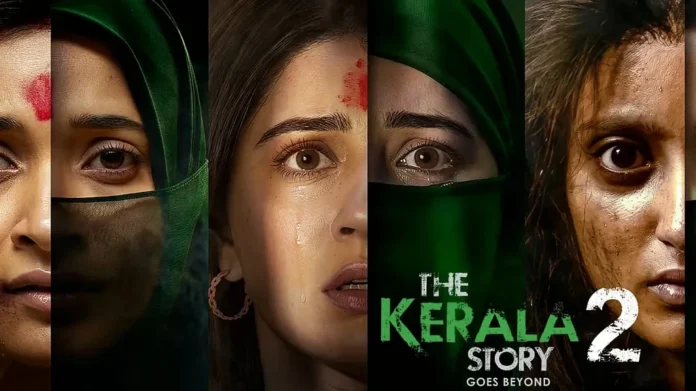
My eyes paused while watching the trailer of ‘The Kerala Story 2: Goes Beyond’, released in mid-February 2026. It opened with a stark voice-over: ‘Inshallah, all of Bharat will become an Islamic state in the next 25 years, and all of Bharat will be ruled under Sharia’.
I had read this line somewhere. I started to remind myself and I was finally at the ‘PFI India Vision 2047’ document, which echoed a similar statement: ‘We dream of 2047 where the political power has returned to the Muslim community from whom it was unjustly taken away by the British Raj’. The document had clear plans to murder 950 individuals; the NIA team also recovered voice clips, and documents calling Hindus ‘Kuffrs’.
Within hours of the trailer’s release, a predictable backlash arose; from Kerala Chief Minister Pinarayi Vijayan (CPI(M))-led LDF to UDF to Congress leader Rahul Gandhi. Voices from the film fraternity Prakash Raj and Anurag Kashyap too, dismissed it as ‘propaganda’ and ‘Hindutva politics’; it was appalling to see when Sudipto Sen, the original director of The Kerala Story distanced himself from the sequel, claiming it was ‘based on WhatsApp forwards’ .
Directors can have their own reservations about how a film is narrated; however, calling it mere propaganda without a factual rebuttal is an intellectual injustice against a work that highlights a pressing issue, particularly when the pattern it depicts is neither exclusively Hindu in origin nor uniquely Indian.
It was not the RSS or the VHP that first raised the alarm. It was the Syro-Malabar Church and the Kerala Catholic Bishops’ Council (KCBC), who began warning their congregations in October 2009 through pastoral letters and newsletters like Jagratha, as well as parish circulars read during mass, and youth programmes advising explicit caution against relationships with Muslim men. KCBC’s newsletter also warned Christian parents and young girls to be vigilant against the ‘International Islamist extremist’ project of increasing the Muslim population through love affairs and forced conversions.
Further, around the same time, KCBC said that up to 4,500 Hindu and Christian girls had been targeted by Islamic fundamentalists.
The sequel’s central thesis is simple: grooming, coerced conversion, radicalisation and ‘targeting non-Muslim women’ is a documented phenomenon in India and neighbouring countries. And I believe, this pattern is not just Southeast Asian, but today, an unavoidable part of the West and its part of Asia too.
It has devastated indigenous ethnic minorities and native faith adherents like Yazidi communities in Iraq, Kurdish women in Syria, native Africans as well as Christian schoolgirls in Nigeria, Ethiopian Jews, as well as the tribal populations across the Indian subcontinent; even in the heart of the ‘first world’, the systematic targeting of ‘young white girls’ in the UK, stands as a stark and disturbing example.
So, the debate is not about isolated consensual interfaith relationships. It’s about why this underlying pattern faces outright denial despite the evidence available globally.
IF WE START from The Kerala Story 2, then, the common criticism of the sequel is that it ‘overgeneralises’ and ‘exaggerates’ the issue. Please hear me out and decide for yourself if this ‘claim’ is true.
The Popular Front of India (PFI), despite being headquartered in Delhi, was most active in Kerala and what its India Vision 2047 says is something that I need not repeat. Plus, yes, it has been banned under UAPA in 2022 for terror funding, radicalisation, armed training camps, and secessionist operations, but it still exists in the form of SDPI, a registered political outfit. Kerala DGP Rawada A. Chandrasekhar confirms the assertion that many PFI cadres have shifted to SDPI after the ban.
On all this, the Kerala government’s response has been half-hearted. State police did assist NIA raids and arrests involving PFI-linked modules, but proactive state action wasn’t something that was adopted. Legally speaking, SDPI remains a registered political party. If this is a threat or not, you decide.
Then, ideologically, the LDF prefers to equate radical Islamist and Hindutva groups as equal threats, projecting a secular image. This image motivates calling films like The Kerala Story 2 propaganda.
This happens because the Left has historically benefited from a fragmented Muslim vote, using SDPI to indirectly weaken the IUML within the UDF. Critics call it vote-bank politics, as the state has a growing minority Abrahamic religious population (18.38% Christians, 27% Muslims), out of which 54.73% still remain Hindu, with Muslims forming the second largest religious group in Kerala.
Thus, by prioritising ‘secular harmony’ optics and avoiding confrontation with influential minority organisations like IUML (core member of UDF-Congress led), WPI, Samastha Kerala Jamiyyathul Ulama (strongly tied to IUML & UDF), SDPI, Mujahid groups and Jamaat-e-Islami, the state effectively delegates the primary burden of countering radicalisation to central agencies while preserving its own political equilibrium. The result is ‘reactive cooperation’ rather than ‘decisive local initiative’.
India saw 60-100 citizens migrated to join ISIS by the late 2010s, with Kerala contributing the largest share, ‘around 100 Malayalis joined ISIS till 2019’, according to Chief Minister Pinarayi Vijayan, among them, 94 were native Muslims and 6 were converts from non-muslim backgrounds. Kerala contributed the largest share: 20–40 direct migrants and 40–70 broader pro-ISIS cases.
As per dossiers, people from Kerala joined ISIS primarily due to a combination of online radicalisation, Salafi-ideological shift, and the pull of a utopian caliphate. According to the Observer Research Foundation primer, social media played a central role as the ‘last step’ in radicalisation, with ISIS disseminating Malayalam propaganda promising a ‘pure Islamic atmosphere’ and encouraging hijrah (migration) to the caliphate or the Islamic States, called ‘Dar-al-Islam’ against the ‘Kuffar’ space, that is designed to destroy Islam.
The Guardian, in 2016, highlighted how Saudi-funded Salafi ideology created a rigid, reactionary worldview among educated youth, detaching them from traditional Sunni leadership through online sermons and fatwas. NPR, in 2019, reported family accounts from northern Kerala (especially Kasaragod) revealing personal stories of young men and converts becoming reclusive, influenced by peers, Gulf returnees, and grievances against perceived rise of ‘majoritarianism’ and Hindu nationalism post-2014, ultimately abandoning families to join ISIS in Afghanistan or Syria.
In recent years, counter-terrorism research reports based on intelligence data have documented a growing pattern where ISIS-affiliated networks, often operating from Kerala, deliberately target economically disadvantaged Dalits (Scheduled Castes) and, to a lesser extent, tribals for conversion to Islam followed by radicalisation. Recruiters exploit caste-based discrimination and economic vulnerabilities by offering promises of social dignity, financial support, free education in Salafi madrasas, and a sense of purpose.
CNN-News18 investigations (2025) revealed that Kerala-based modules, supported by Gulf funding and linked to groups like PFI/SDPI, function as an ‘ideological processing centre’, funnelling vulnerable Dalit minors, especially girls, into Salafi indoctrination and, in some cases, toward ISIS-Khorasan (ISKP) networks in Afghanistan.
This strategy marks a shift from earlier recruitment among educated Muslim youth toward exploiting Hindu society’s caste fault lines for long-term expansion. This trend is part of a broader jihadist tactic of targeting marginalised communities globally, though in India it is most prominently reported from southern states with strong Salafi networks.
The same can be traced in the PFI 2047 Vision document titled ‘Towards Rule of Islam in India’, wherein this has been said: ‘We need to create a split between RSS and SCs/STs/OBCs by projecting that RSS is an organisation interested only in the welfare of upper caste Hindus’.
Further, Islamist groups like ISIS have actively targeted non-Muslims from liberal or secular backgrounds for conversion, as converts often become highly zealous recruits seeking a strong identity and purpose after rejecting their previous progressive lifestyles. Europe’s Muslim population reached around 6% (46 million) by 2020–2025, driven by uncontrolled migration and higher fertility.
This has created de facto enclaves in Western Europe with native white flight and limited state control (called ‘no-go-zones’). Sweden’s police (Dec 2025) list 65 vulnerable areas (19 particularly vulnerable with parallel societies and police access difficulties) and France has hundreds of priority urban districts (formerly 751 ZUS) with heavy Muslim majorities. Similar patterns exist in Germany and the UK as well.
These zones have fueled radicalisation, producing a sharp rise in European recruits to ISIS and Al-Qaeda: 5,000–6,000 EU citizens/residents travelled to Syria/Iraq at the 2014–2016 peak, with France sending 1,700, the UK and Germany 760 each, and Belgium 470, far higher per capita than in low-migration Eastern Europe.
Converts from Christian or non-religious liberal families have a disproportionately high share of ISIS foreign fighters and attackers. Similarly, ‘reverted’ Muslims (those who shifted from secular-liberal lifestyles to stricter Islamic practice) are frequently targeted during their phase of identity crisis and guilt.
Maajid Nawaz, a liberal British-Pakistani’s story in ‘Radical: My Journey Out of Islamist Extremism’ (Book + Talks) and Deeyah Khan’s documentary Jihad: A Story of the Others can be referred to understand how and why this happens.
Reports also suggest that since the October 2023 Israel-Hamas war, this trend has accelerated worldwide, serving as a catalyst for self-radicalisation through social media by intensifying grievances and narratives of defending Muslims against perceived Western/Zionist and Hindutva oppression.
This acceleration is closely linked to the Islamic/Muslim Brotherhood solidarity movement for both Palestine and Kashmir, which frames the two causes as part of the same global struggle against oppression. Hashtags such as #FreePalestine, #AllEyesOnGaza, and #KashmirIsThePalestineOfTheEast have helped globalise the narrative, fostering a sense of transnational Muslim brotherhood (Ummah) and encouraging vulnerable youth, including secular and liberal Muslims, to view jihadist ideology as a legitimate form of resistance and solidarity.
Not just this, in the heart of Kerala, in October 2023, Jamaat-e-Islami-linked Solidarity Youth Movement (SYM) organised a pro-Palestine event in Malappuram. The rally featured a virtual video message from Hamas leader Khaled Mashal, in which he addressed the gathering in solidarity with Palestine and described the terrorist organisation Hamas as ‘freedom fighters’ or a resistance movement against Israeli and American imperialism. During the rally, the SYM raised the slogan, ‘Uproot bulldozer Hindutva and apartheid Zionism’.
Organisers and some state officials maintained that the event was ‘not problematic’, noting that Hamas is not a banned organisation in India and the programme had prior permission. This is how loopholes are used to support an anti-Semitic organisation like Hamas. That’s Indian Communists and Jihadis for you.
This selective approach reflects a wider dynamic in Kerala politics, where electoral stability and the need to accommodate influential ideological organisations with strong minority support often lead to a lenient stance on certain issues, while similar expressions from the other ideological spectrum face sharper scrutiny.
What do the analysts say on this? Some analysts draw parallels between contemporary Kerala politics and pre-1979 Iran, where tactical alliances between leftist groups and Islamists converged against the Shah (aligned to ‘Imperialist America’), only to collapse violently once the Islamists seized power.
In Iran, secular Marxist and leftist women like Fatemeh Zarei (called ‘Mother of Chowra’) and 18-year-old Niloufar and other women from Fedayeen, Tudeh Party and MEK, who supported the revolution were later subjected to systematic state-sponsored rape, torture, and execution; these barbarism and betrayals were documented by Ayatollah Montazeri, a 79-year-old cleric who had been for 10 years the designated successor to Khomeini, the supreme leader of the theocratic regime in Iran, in his memoirs.
The contexts differ, but the comparison is invoked to caution that such coalitions, ‘marriage of inconveniences’ of secular-marxists and Islamists formed for short-term alignment, carry long-term risks. Thus, a similar dynamic is visible in Kerala today, where both CPI(M)-led LDF and the Congress-led UDF have engaged in tactical electoral accommodations with Islamist outfits such as SDPI (widely seen as the political front of banned PFI), Jamaat-e-Islami, and its youth wing SYM.
These ‘Red-Green’ alliances are often justified as a strategy to consolidate minority votes and counter the BJP’s ‘majoritarian politics’. The LDF, in particular, fears that aggressive action against SDPI could alienate a key Muslim vote bank (around 27% of the population) in the state. But we know that such a coalition risks empowering more radical elements at the expense of the very secular and progressive forces they march with, including women and vulnerable youth across all communities, irrespective of their niche voters in the state.
IT SEEMS THAT it’s not just about the majority Hindus about whom the political class of Kerala doesn’t care, but also about the minority Christians too. The original ‘The Kerala Story’ was inspired by Sonia Sebastian, a young Roman Catholic MBA graduate from Kerala, who was groomed and converted to Islam, taking the name Ayesha, by her husband Abdul Rashid Abdulla, an NIA-identified ISIS recruiter.
In 2016, they travelled with their child to join ISKP in Afghanistan. They were among 21 converted Hindu and Christian Keralites who left India between 2016 and 2019 to join the ‘caliphate’ and live in Dar-al-Islam (region under Islamic rule). They went to live a pure Islamic life, which was not possible in the land of Kuffar/idol-worshippers and their government (non-Muslims, in our case: Hindus).
What was the result? Sonia Sebastian, with her child, surrendered after her husband’s death to the Afghan National Security Forces (under the pre-Taliban Afghan government) after the collapse of ISIS in November 2019. In a 2020 video (part of the Khorasan Files documentary), she expressed deep regret, calling the caliphate ‘disillusioning’ and seeking a return to India.
Her father, VJ Sebastian, approached the Supreme Court of India in 2021 seeking her repatriation. The Indian government has been reluctant, as repatriation in such cases becomes highly contested when participation was voluntary, as confessed by Sonia herself. Hence, she still remains detained in Pul-e-Charkhi Prison, Kabul, under Taliban custody, along with a few other Kerala women from the same module. Seeking some things late becomes impossible to achieve.
Similarly, thousands of foreign nationals, including many Europeans, remain held in northeast Syrian camps under extremely harsh conditions.
This is the inevitable consequence of rejecting one’s safe haven, alienating one’s native culture in search for someone else’s paradise.
Counter-terrorism research and intelligence reports describe Kerala as a key testing ground, with successful conversion cases involving secular and atheist women for their ‘womb value’, as well as young boys and men for physical combat from Hindu, Sikh, Buddhist, Tribal, Dalit and Christian backgrounds (after conversion to Islam). Kerala’s educated, politically aware youth, remittance economy, and coastal access to Gulf trade make it particularly susceptible to exploitation, including smuggling networks that align with the PFI’s 2047 vision, a fertile ground for mission.
The churches were right when they did the following: a post-synodal pastoral circular/letter was issued by Cardinal George Alencherry, which was formally read out in churches during Sunday Mass on 19 January 2020. The church synod, held in Kochi (Ernakulam) explicitly cautioned that ‘love jihad was real’.
Now, understand, despite all this publicly available evidence, the self-proclaimed rationalists, CPI(M)-affiliated SFI and DYFI found it better to organise a ‘Beef-Parotta’ protest mocking the Kerala Story sequel’s depiction of coercion rather than accepting the facts available on one click.
THE PATTERN OF targeting non-Muslim women is not Indian. It’s transnational. And it effectively shatters the arguments in favour of ‘BJP-RSS anti-Muslim politics’ in India narrative.
ISIS-inspired jihadist groups present the enslavement of non-Muslim/kuffar women, labelled spoils of war/mal-e-ghanima/sabaya/concubines/sex slaves, as religiously ‘permissible’ to justify the systematic enslavement and sexual exploitation of non-Muslim women and girls captured during jihad.
For example, ISIS declared Yazidi women in particular as legitimate ‘war booty’, claiming they could be raped, sold, gifted, or kept as concubines, per their interpretation of Sharia.
Upon further research, what I came across was more damning, the group even established a formal ‘Department of War Spoils’ to regulate the trade of female captives. This ideology was openly promoted in their propaganda magazine Dabiq (Issue 4, 2014), where they proudly revived the Arabian practice of sexual slavery.
During the 2014 Yazidi genocide in Sinjar, thousands of women and girls were abducted, sold in slave markets in Mosul and Raqqa, and subjected to repeated sexual abuse by ISIS fighters. A fact confirmed by the UN Commission of Inquiry on Syria (2016) and Reuters investigation (2015).
In January 2026, too, ISIS remnants reportedly severed the braids of captured Kurdish women fighters as war trophies, prompting a global solidarity ‘braiding campaign’ among Kurdish and feminist groups.
Non-Muslim women abducted, groomed, and converted by groups like ISIS are specifically chosen for their perceived ‘womb value’. They are subjected to systematic rape and coerced pregnancies to bear children, particularly boys, as future mujahideen to sustain the caliphate’s ideology across generations.
ISIS invested heavily in the ‘Cubs of the Caliphate’ (Ashbal al-Khilafah) program to create long-term ideological loyalty. ISIS separated boys as young as 7 from their families, sent them to recruitment camps for Quranic indoctrination and military training (including use of weapons), and aimed to turn them into mujahideen.
The kids are trained to view violence as a way of life and to become the next generation of devoted fighters and suicide bombers, ensuring the caliphate’s continuity. Unfortunately, this practice is also sustained by the terrorist organisation HAMAS in Palestine. It runs annual summer camps, such as the ‘Liberation Vanguard’ and ‘Sword of al-Quds’ programmes, where thousands of boys as young as 12–15 receive weapons training (including AK-47s), tunnel warfare drills, and ideological indoctrination.
The official report on the Yazidi genocide by the UN Commission of Inquiry on Syria (2016) states that ISIS sought to destroy the Yazidis in part by ‘imposing measures intended to prevent Yazidi children from being born’ while forcing Yazidi women to bear children fathered by ISIS fighters (who would be raised as Muslims), to expand its demographic base while reducing the population of those diverse communities it seeks to eradicate.
The ISIS ‘Research and Fatwa Department’, also issued detailed rules on female captives, including instructions to check that a woman’s ‘uterus is purified’ (i.e., not pregnant by another man) before intercourse, and rules preventing the sale of a slave who becomes pregnant by her owner.
ISIS systematically separated women of childbearing age from older women (the latter were often executed), while keeping younger women and girls alive for enslavement and impregnation. These reports explicitly link sexual slavery to demographic erasure and replacement.
The scale is staggering. In August 2014, ISIS seized between 6,000 to 7,000 Yazidi women and girls in Iraq and Syria. That same year, between 14-15 April, Boko Haram abducted 276 primarily Christian children in Chibok, Nigeria. As of January 2026, 90 to 100 still remain in captivity.
Each year, over 1,000+ girls from Hindu, Buddhist, Tribals, Dalits and Christian backgrounds face the same fate in Pakistan and Bangladesh.
One of the recent examples is the UK’s Grooming gangs, where groups of men, overwhelmingly of British-Pakistani heritage, groomed, trafficked, raped, and abused girls (mostly white girls) as young as 11 over many years. In European countries, it is called ‘rape-jihad’. The Alexis Jay Report (2014) as well as Baroness Casey Audit (2025), BBC, The Guardian, and Sky News suggest that it was systematically organised sexual exploitation of thousands of vulnerable young girls, predominantly white British, in towns such as Rotherham, Rochdale, Oxford, Telford, and Huddersfield.
Further enquiries exposed organised child sexual exploitation via ‘friendship tactics’. A conservative estimate documented over 1,400 victims between 1997 and 2013.
In July 2025, UP police busted the ‘love jihad’ racket of Jamaluddin alias Chhangur Baba. The operation had been funded with Rs 100 crore from the Gulf for over more than 15 years, targeting Dharmic women and minor girls specifically. A ‘caste-based rate card’ pricing non-Muslim women was recovered: Brahmin/Sikh/Kshatriya women at Rs 15–16 lakh, OBC women at Rs 10–12 lakh, and others at Rs 8–10 lakh. The same was highlighted in the 2026 sequel’s trailer.
If this is propaganda, I wonder what the truth would look like.
At the intersection of personal laws and child protection statutes, young girls from non-Muslim backgrounds, particularly from Dalit, Tribal and other socio-economically vulnerable categories, often become trapped in complex legal battles. When parents seek to ‘revert’ or rescue their minor daughters from alleged grooming or forced conversion, they frequently face obstacles under Muslim personal law, which traditionally recognises marriage upon attaining puberty (presumed at 15 years or even earlier in classical interpretations).
This creates tension with secular laws such as the POCSO Act (which sets the age of consent at 18) and the Prohibition of Child Marriage Act. Critics argue this legal grey area is exploited to shield predatory behaviour, with some claiming the relationship has ‘nothing to do with love jihad’. A parallel trend can be observed in cities like Hyderabad, with the continuation of practices of Misyar or traveller’s marriages (temporary or convenience-based contracts often involving Gulf visitors and much younger local girls).
In tribal-belt areas, non-tribal individuals, including Bangladeshi infiltrators and Muslim men, are accused of deliberately forming romantic ties with tribal women, leading to conversion. Once converted, women are pressured to enable land transfers, mining leases, or property sales to Muslim entities, bypassing laws like the Chotanagpur Tenancy Act (1908). Tribal and church groups call this ‘land jihad’, with multiple FIRs and enquiries on record.
To give an example, in Sahibganj, Jharkhand, tribal families are entrapped by getting them into debt traps by giving loans of Rs 5000, which gradually end up with a debt of over Rs 50,000 within a few months. And what happens if families are unable to repay? ‘Bangladeshis demand their daughters to marry them against the debt,’ said Asha Lakra, a member of the Scheduled Tribes Commission. Grabbing tribal land through donation deeds obtained from the notary is another kind of jihad these Bangladeshis do.
In January 2026, the letter addressed to the Sub-Divisional Magistrate of Zanskar Sub-Division, highlighted the cases of missing Buddhist girls from Zanskar region, especially the case of Stanzin Yangdol, a missing Buddhist girl feared to have been wrongfully confined for conversion. The Zanskar Buddhist Association demanded a strict anti-conversion law to curb what they described as ‘Love Jihad’ in Ladakh.
In the letter, ZBA alleged that Buddhist girls were being systematically targeted through deception, inducement, and fraudulent conversions, often under the guise of love and marriage. They highlighted the one-sided nature of these conversions, where only the Buddhist girl converts to Islam.
The association warned that such organised patterns posed a serious threat to communal harmony and demanded immediate rescue of the girl along with stringent legal safeguards against forced or deceptive conversions. Similar patterns have been reported in Punjab and Jammu and Kashmir, where Sikh community has said that their young women are being targeted in similar patterns.
Portrayed as ‘love’, but in reality, these networked operations, supported by Gulf hawala money and propaganda materials, function as organised covert demographic warfare programmes.
At the heart of this pattern lies a specific ideological framework – The Jihadist doctrine. This doctrine treats women as primary strategic assets for demographic and ideological expansion: bearing and raising mujahideen for the caliphate. ISIS magazines like Dabiq and Rumiyah state it plainly: ‘Bear as many children as possible, for with every Muslim newborn a thorn is planted in the throat of disbelief’.
This framework manifests across continents. The Ayatollah Shiite system in Iran exhibits similar state-sponsored programmes like Sigheh or Nikah-al-Mut’ah for demographic control like Khamenei’s 2014 decree on General Policies on Population, urging higher birth rates. This phenomenon is called ‘population jihad’ in India.
This happens because classical Islamic jurisprudence of war and politics divides the world into three domains, as classified by Dr BR Ambedkar in his book ‘Pakistan or Partition of India’, that is: Dar al-Islam (House of Islam: territories under Islamic rule and Sharia law), Dar al-Aman (House of Peace/Safety: non-Muslim lands where Muslims are allowed to live peacefully under agreements or protection) and Dar -al Harb (House of War: territories considered hostile to Islam where jihad is permissible to expand Dar al-Islam).
Thus, in order to achieve Dar al-Islam or the establishment of Sharia over the world, which is a divine mandate and an obligation for all Muslims, three methods are prescribed: rapid mass conversion of non-Muslims (dawah), reproduction through converted and Muslim women, or physical jihad.
Investigation dossiers and survivor testimonies describe this as intentional demographic engineering. In northeast Syria’s al-Hol and al-Roj ‘ISIS Bride’ camps, women have exploited pubescent boys aged 12–15 through forced marriages, sexual abuse, and coerced pregnancies to sustain the caliphate’s ideology and smuggle future fighters, per 2023–2025 reports from International Center for the Study of Violent Extremism (ICSVE), Rudaw, CNN, and other humanitarian aid officials.
SECULAR URBAN YOUTH remain vulnerable to online radicalisation, which often begins with moral and social justice appeals and ends in jihadist recruitment.
The process exploits social media platforms like TikTok, Instagram, and Telegram. Algorithms guide vulnerable youth, especially liberals, atheists, and secular Muslims, to ‘revert’ testimonies framed as liberation and brotherhood. The Gaza war accelerated this sharply. Viral #FreePalestine and #AllEyesOnGaza videos framed the conflict as a Western-Zionist-Hindutva assault on Islam, turning solidarity activism into a pipeline for viewing jihad as a moral duty. A 2025 UK study linked Gaza-era crises to a 20 per cent rise in conversions since late 2023.
Salafi-jihadi influencers repackage these testimonies with Qur’anic verses and revenge calls, while portraying groups like Hamas, LeT, JeM, and JKLF as ‘freedom fighters’ for Palestine and Kashmir alike.
The radicalisation process follows this pattern: delegitimise the target’s native faith and community (for example, through forced beef consumption in India), groom with utopian promises of justice and afterlife rewards, alienate from family and culture, and then recycle the converted to erode non-Muslim communities and political structures.
In recent developments, Jaish-e-Mohammed’s (JeM) women’s wing has been training Muslim women as low-suspicion assets and sleeper cells. A prominent example is Saida Begum, a widow from Hyderabad, who was arrested in a major multi-state operation in 2026.
She headed the women’s wing named ‘Khawateen’ and was tasked with recruiting and radicalising women, working in coordination with the group ‘Al Malik Islamic Youth’ to promote Ghazwa-e-Hind on behalf of banned outfits AQIS and ISIS. Among the 12 native Muslim individuals arrested in the same module were several educated youth.
This case further dismantles the ‘poverty porn’ narrative often used to explain terrorism against one’s nation and citizens. White-collar terrorism is not new in jihadist organisations. From its inception, groups like Al-Qaeda, ISIS, and JeM have actively preferred recruits from educated backgrounds, especially those with degrees in STEM and Humanities.
Notable examples include Ayman al-Zawahiri, a qualified surgeon who became Al-Qaeda’s leader; Khalid Sheikh Mohammed, who studied Mechanical Engineering and masterminded the 9/11 attacks; Mohammed Atta, who held a Master’s in Urban Planning and led the 9/11 hijackers; and Anwar al-Awlaki, who earned degrees in Civil Engineering and Education. This pattern was starkly visible in the 2025 Delhi blast case involving Dr Shaheen, a well-educated professional radicalised online with other doctors.
While the absolute numbers remain limited, there have been several documented cases of students and alumni from premier institutions being arrested for links with ISIS and other jihadi outfits. In 2024, Tauseef Ali Farooqui, a 4th-year Bioscience student at IIT Guwahati, was arrested under UAPA for pledging allegiance to ISIS on social media and attempting to join the group.
In 2023, Shahnawaz Alam, a B.Tech graduate in Mining Engineering from NIT Nagpur, was arrested in the Pune-Delhi ISIS module for his involvement in IED fabrication and terror financing. Multiple arrests have also taken place involving students and alumni from Aligarh Muslim University (AMU) and other engineering colleges in Bengaluru, Hisar, and various NITs/IITs, where individuals were radicalised online and charged with pro-ISIS activities or planning to join terror groups.
WHEN THE PATTERN affects Yazidis or British schoolgirls, the world responds with award-winning documentaries. Films like Sabaya (2021), Caliphate (2020, Netflix), and Black Crow (2017, Netflix) are available on major streaming platforms. Survivor accounts and documentaries including On Her Shoulders (2018, Nadia Murad), Escaping ISIS and Return From ISIS (Frontline), Britain’s Jihadi Brides (BBC), and 10 Years of Darkness: ISIS & The Yazidis (Sky News), are treated as factual, honourable works that mourn the suffering of victims.
But, what is disheartening to see is that, when the same pattern is called out in Indian socio-political discourse, it becomes the highest form of ‘political blasphemy’. Actually, when some people aren’t able to speak the truth, they find ways not to speak it at all. Political dishonesty becomes one tool out of many available in the politicians’ box of excuses, across all parties.
The Kerala Story and its 2026 sequel, which address identical patterns, face allegations of being ‘propaganda’. The issue is not whether every instance conforms to a single narrative. It is why documented cases are systematically and aggressively dismissed, particularly when they involve the victimisation of majoritarian women.
Discrediting, insulting, mocking (through the ‘beef protest’), and blaming victims, all framed as a response to majoritarian politics, reflects a familiar pattern.
A similar drill accompanied The Kashmir Files.
Denial is not neutral. It is politically motivated and selective. It is to get some votes and to win a seat. To rise in one community’s eyes, while not leaving another community to raise their eyes even for a second is sheer inhumane behaviour.
Protecting minor girls, young boys and women across communities requires sincerity beyond political convenience. India’s diversity cannot survive if national political parties ignore these recurring threats.
Any ideology that seeks to reshape India’s demographic and political landscape through force, organised grooming, or covert networks must be recognised for what it is: a national security threat.
Denial does not foster harmony. It ensures that the cycle continues: unseen, unrecognised, and unchallenged.