

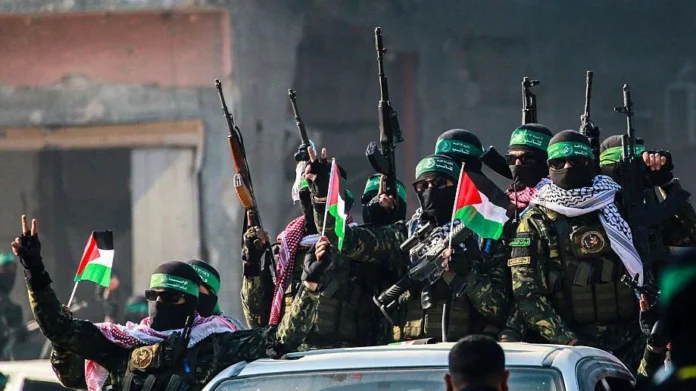
In the last week of June 2026, Congress Parliamentary Party Chairperson Sonia Gandhi, who is often regarded as the “Super PM” during the UPA era, wrote an article in The Indian Express, the very epitome of neutrality. It was titled: “India remains silent on Gaza, while the world continues to speak up.”
Certainly, India should speak up on Gaza like the world, but not for criticising Israel, as what Israel is doing is in self-defence. India should speak up for recognising Hamas as a terrorist organisation.
On the morning of 7 October 2023, 3500 young people were dancing at a music festival in southern Israel. By afternoon, 378 of them were dead. The women among them had been raped. The babies among the hostages had been paraded through Gaza’s streets to cheering crowds. In the kibbutz of Be’eri—a small farming community of about 1300 souls—130 were murdered, which is roughly 10% of the population. 251 people were dragged into Gaza as hostages. In total, 1139 people were killed in a single day.
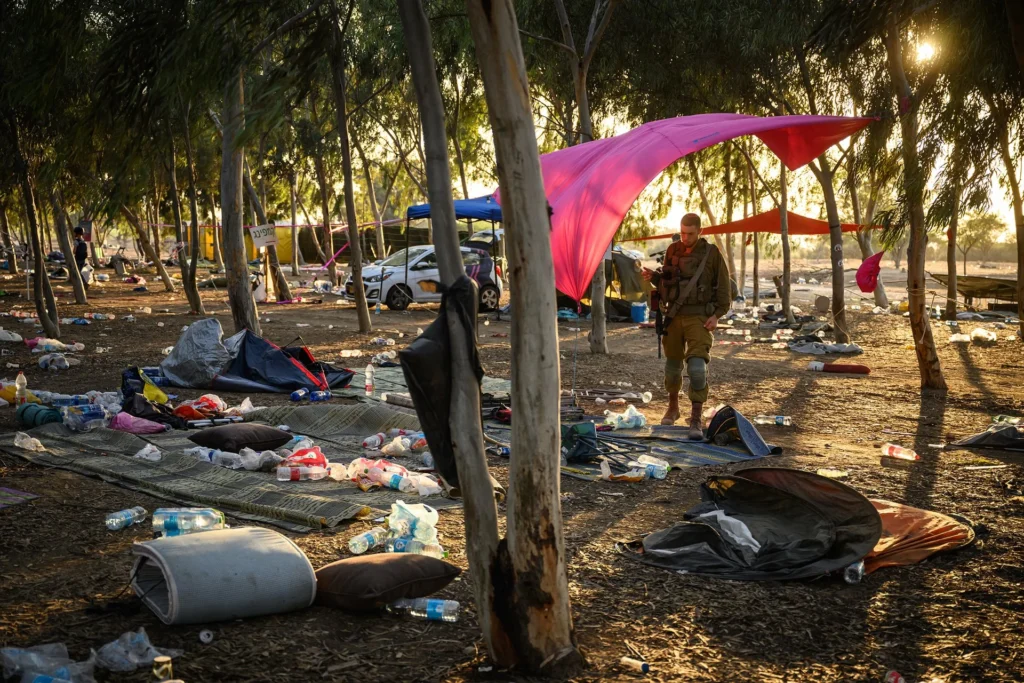
And then, a curious thing happened. In Kerala, 200000 people marched in solidarity — not with the murdered, but with the murderers. In the Jawaharlal Nehru University (JNU), there were candlelight vigils — not for the dead Jews, but for the “resistance.” In the faculty lounges of Jamia Millia Islamia, they chanted “From the river to the sea” — which, for those who haven’t consulted a map recently, leaves rather little room for the Jews in between.
This is the story of Hamas. Not the sanitised version you get from the “it’s complicated” crowd, but the actual thing: in its charter, its funding, its tunnels, and its useful idiots from Thiruvananthapuram to Brooklyn.
You cannot understand Hamas without understanding the Muslim Brotherhood, in much the same way that you cannot understand a metastatic tumour without understanding the original cell. Hamas, after all, doesn’t hide the connection. It’s right there in the charter:
Hamas is a branch of the Muslim Brotherhood organization in Palestine.
No euphemism. No diplomatic wriggling. Just a plain confession that nobody bothers to read.
The Brotherhood was founded in 1928 by Hassan al-Banna, an Egyptian school teacher in Ismailia, with six Suez Canal workers and a dream. The dream, in case you’re wondering, was the restoration of the Caliphate — that is, a single Islamic superstate governed by sharia, stretching from Morocco to Malaysia, in which the quaint Western notion of “nation-states” would be abolished. Al-Banna put it rather succinctly:
Islam does not recognize geographical boundaries, nor does it acknowledge racial and blood differences.
Which is to say: your passport, your parliament, your constitution: all void. One Ummah, one Caliph, one law.
And lest anyone mistake this for a peaceful religious revival, al-Banna was quite explicit about the methodology. He warned Muslims against the “widespread belief that jihad of the heart is more important than jihad of the sword.” Heart-jihad is for weekdays; sword-jihad is the main event.
By the 1940s, the Brotherhood had half a million members in Egypt alone. Then came Sayyid Qutb, the Brotherhood’s chief ideologue, who in 1964 wrote Milestones, a book that is to Islamic terrorism what Das Kapital is to communism: the intellectual detonator. Qutb argued that existing Muslim governments were apostate, that violent revolution was divinely mandated, and that the entire non-Islamic world existed in a state of jahiliyya—pre-Islamic ignorance—that must be conquered. Qutb was hanged by Nasser in 1966, which only made his ideas more popular.
The genealogy, then, is straightforward: Muslim Brotherhood → Sayyid Qutb → al-Qaeda, ISIS, and Hamas. Different branches, same root. The only variation is geographical.
In December 1987, the first Palestinian intifada erupted against Israeli occupation. Sheikh Ahmed Yassin, who had been running a Muslim Brotherhood-affiliated charity in Gaza since 1973—schools, clinics, mosques, the usual social-services-as-political-infrastructure playbook—decided the moment had arrived for something more muscular.
He called it Harakat al-Muqawama al-Islamiyya – the Islamic Resistance Movement. Hamas.
The deliberateness of the branding is worth noting. The PLO — Yasser Arafat’s outfit – was secular, nationalist, and, crucially, willing to negotiate. Hamas positioned itself as the religious alternative: no negotiation, no compromise, no two-state solution. This wasn’t a territorial dispute. It was jihad.
And to make the point unmistakable, Hamas torpedoed the Oslo Accords before the ink was dry. In April 1993—five months before Arafat and Rabin shook hands on the White House lawn—Hamas carried out its first suicide bombing. The message was clear: you sign peace deals, we send bombers. Similar to what Pakistan did to us after Vajpayee’s state visit and after Modi’s 2014 Lahore visit. Hamas mentality isn’t restricted to Palestine.
In 1997, the United States designated Hamas a foreign terrorist organization. By then, this was rather like designating water as wet.
On August 18, 1988, Hamas published its charter. It is one of the most remarkable documents in the history of political movements, in the sense that it is a frank, unambiguous, 36-article manual for genocide that the entire world has somehow managed not to read.
Article 7 of the manual quotes a hadith:
The Day of Judgement will not come about until Moslems fight the Jews (killing the Jews), when the Jew will hide behind stones and trees. The stones and trees will say O Moslems, O Abdulla, there is a Jew behind me, come and kill him.
This is not metaphor. This is not “context.” This is a religious prophecy deployed as political programme.
Article 11 declares all of Palestine an “Islamic Waqf consecrated for future Moslem generations until Judgement Day.” No partition. No sharing. No Israel.
Article 13 is perhaps the most clarifying:
There is no solution for the Palestinian question except through Jihad. Initiatives, proposals and international conferences are all a waste of time and vain endeavors.
So when your next-door intellectual tells you that “Hamas is open to a political solution” – ask him to read Article 13. It’s only two sentences.
Even a dufli communist JNU graduate can manage it.
Article 32, meanwhile, approvingly cites the Protocols of the Elders of Zion — a tsarist-era Russian forgery that even the Nazis had the decency to be slightly embarrassed about deploying in official documents.
In 2017, Hamas issued a revised document softening some language and substituting “Zionists” for “Jews.” The international commentariat swooned. What they neglected to mention was that the 2017 document does not replace the 1988 charter. It supplements it. The original charter, kill the Jews, destroy Israel, jihad is the only way, remains in force.
And on 7 October 2023, Hamas demonstrated rather conclusively which document it considers operative.
As someone wise once said: when someone tells you who they are, believe them the first time.
In 2005, Israel withdrew from Gaza. In 2006, Hamas won a majority in Palestinian legislative elections. In 2007, Hamas carried out a violent coup against Fatah in Gaza, routing its militias in a week of fighting and establishing total control.
There have been no elections in Gaza since 2006. No elections for President since 2008. In the intervening 18 years, Hamas has built an authoritarian theocracy with no free press, no opposition, no transparency, and no accountability. Women’s dress is regulated. Gender segregation is enforced in public spaces. Civilian activism on social media is crushed. Freedom House’s verdict, published in 2020:
The Hamas-controlled government has no effective or independent mechanisms for ensuring transparency in its funding, procurements, or operations.
This is the standard Islamist electoral strategy: one man, one vote, one time. Win the election, then abolish elections. Erdogan’s Turkey, Morsi’s Egypt – the playbook is identical wherever the Muslim Brotherhood or its affiliates gain power. Democracy is the bus you ride to your destination, then you get off.
Hamas’s annual budget is a study in the globalisation of terror.
Iran is the headline sponsor. The U.S. State Department estimates that Iran’s Islamic Revolutionary Guard Corps (IRGC) provides approximately 100 million dollars annually to Hamas, Palestinian Islamic Jihad, and other designated terrorist groups. Over a four-year period, the IRGC-Quds Force transferred over 200 million dollars to Hamas’s al-Qassam Brigades alone. After 7 October, Iran immediately praised the massacre and pledged continuing support. This is, in case anyone is confused, the same Iran that simultaneously sponsors Hezbollah in Lebanon, the Houthis in Yemen, and various militias in Iraq and Syria — the so-called “Axis of Resistance,” which is quite the euphemism for an intercontinental terror network run out of Tehran.
Qatar has been the polite funder – the one who sends his cheques with a charitable note attached. Between 2012 and 2021, Qatar provided $1.49 billion to Gaza. The remarkable part is that this was done with Israeli knowledge and cooperation. Israel’s theory was that if Hamas received enough money, it would remain calm. On 7 October 2023, this theory underwent a rather severe empirical test.
Turkey, under Erdogan—himself ideologically aligned with the Muslim Brotherhood—provides political support and has been accused of funnelling funds through its Turkish Cooperation and Coordination Agency. Several senior Hamas leaders, including Zaher Jabareen, operate from Turkish offices.
And then there’s the tunnel tax. Hamas collects upward of 12 million dollars per month from duties on goods smuggled through Egyptian border tunnels into Gaza. By 2021, this was a tidy $144 million a year — collected from the very population Hamas claims to be “liberating.”
Here is the single most damning fact about Hamas, and the one that no so-called “Free Palestine” activist will ever address: Gaza, where unemployment exceeds 50%, where clean drinking water is a luxury, where 90% of the population has been displaced by war – that Gaza sits atop an estimated 500 to 700 kilometres of military tunnels. 5700 separate shafts. Estimated construction cost: somewhere between 500 million and one billion dollars.
One billion dollars. Underground. On tunnels.
Not hospitals. Not schools. Not water treatment plants. Tunnels.
And where were these tunnels? Under hospitals. Under schools. Under residential buildings. And—in a detail so grotesque it reads like satire—under the headquarters of UNRWA, the United Nations agency that supposedly helps Palestinian refugees. Israel discovered a tunnel approximately 60 feet deep and half a mile long running beneath the UNRWA compound in Gaza, complete with computer servers powered by UNRWA’s own electricity supply.
UNRWA said it didn’t know.
After 7 October, it also emerged that UNRWA employees were themselves Hamas members, some of whom participated in the massacre. The United States—UNRWA’s largest donor—suspended funding for a year. 12 other countries followed suit.
So to recap: the UN agency meant to help Palestinian refugees was sitting on top of a Hamas military installation, powered by UN electricity, staffed in part by Hamas operatives who participated in a massacre. And if you mention this in polite company, you’re the one who’s being “unhelpful.”
On the morning of 7 October 2023, Hamas launched over 4000 rockets at Israel. Simultaneously, militants breached the Gaza border by land, sea, and air — paragliders, vehicles, speed boats. They attacked 21 communities.
The Nova music festival. Be’eri. Kfar Aza. Nir Oz.
Rape documented. Beheadings documented. Bodies desecrated. Two hundred and fifty-one hostages.
Bruce Hoffman of the Council on Foreign Relations noted:
It is completely unprecedented that a terrorist organization would have the capacity or the wherewithal to mount coordinated, simultaneous assaults from the air, sea, and land.
This was Israel’s 9/11 — and, adjusted for population, significantly larger.
The war that followed has, as of early 2026, killed over 72000 Palestinians according to Gaza’s Health Ministry, destroyed 90% of Gaza’s civilian infrastructure, and displaced over 90% of its two million residents. It has also systematically eliminated Hamas’s entire senior leadership.
Israel has, since 7 October conducted perhaps the most methodical decapitation campaign in the history of counter-terrorism: Saleh al-Arouri, head of Hamas in the West Bank – killed January 2, 2024; Marwan Issa, deputy military commander – killed March 10, 2024; Mohammed Deif, military commander of al-Qassam Brigades – killed July 13, 2024; Ismail Haniyeh, political chief since 2017 – killed July 31, 2024, in Tehran, while a guest of Iran (a detail that would strain credulity in a le Carré novel); Yahya Sinwar, architect of 7 October, replaced Haniyeh as political chief – killed October 16, 2024, in a chance encounter in Rafah; Issam al-Da’alis, Gaza’s de facto prime minister – killed March 2025 and Mohammed Sinwar, Yahya’s brother, last senior military commander in Gaza – killed May 13, 2025
In September 2025, Israel struck Hamas’s Politburo offices in Doha, Qatar, sending surviving leaders scrambling to Turkey and undisclosed locations.
A five-person temporary leadership council was formed after Sinwar’s death – Khaled Mashal, Khalil al-Hayya, Zaher Jabareen, Muhammad Darwish, and a fifth unnamed member believed to be Mousa Abu Marzouk. Elections for a new political chief were scheduled for March 2025. They have not occurred.
As CFR’s Steven Cook drily noted:
The rate at which Israel has been assassinating Hamas leaders has made it increasingly difficult to determine who is in charge in the enclave.
This is the part that the “solidarity march” organisers never mention.
Before 7 October, Hamas was unpopular in both Gaza and the West Bank – less unpopular than other factions, but unpopular nonetheless. After 7 October, support rose—four points in Gaza, nearly quadrupled in the West Bank—but still failed to achieve majority support in either territory.
The Palestinian Center for Policy and Survey Research in Ramallah added this remarkable footnote to its December 2023 survey:
Almost 90 percent of the public believes Hamas men did not commit the atrocities depicted in videos taken on that day.
90%. This is what 18 years of Hamas monopoly over media and education produces – a population that literally cannot see documented reality.
By September 2024, support for Hamas’s offensive had dropped to 39% – 18 points lower than six months prior. The “resistance” was losing its lustre, even among Palestinians.
Why should any of this matter to you, sitting in Pune or Patna or Panchkula?
Several reasons, none of them comfortable.
First, India is Israel’s largest defence customer. 42.1% of all Israeli arms exports go to India. Israel is India’s second-largest military equipment supplier after Russia. Iron Dome technology, drone systems, missile systems, intelligence sharing – this is the architecture of India’s national security. In February 2026, Prime Minister Modi visited Israel and signed sixteen agreements and eleven joint initiatives. Hamas’s backers—Iran, Hezbollah—are actively invested in weakening this relationship. The same Iran that funds Hamas also supports Pakistan. Same axis, different theatre.
Second, the Muslim Brotherhood’s ideology does not recognise borders. Al-Banna said so himself. Hamas is a Brotherhood branch. The Brotherhood operates in over seventy countries. In India, Jamaat-e-Islami—the Brotherhood’s South Asian ideological counterpart—is politically active, ideologically aligned, and has been for decades.
Third, study Hamas’s operating model: charity → political legitimacy → military wing → governance capture. Elections in 2006, violent coup in 2007, total control ever since. This is precisely the model that PFI and SDPI were attempting in India before the ban – social work, political party, cadre-based organisation. SIMI—the banned Students Islamic Movement of India—had documented ties to Hamas. SIMI members migrated to PFI. PFI spawned SDPI. The network is there for anyone willing to look.
Fourth, and most insidious: the narrative war. “From the river to the sea” is not a peace slogan. It is a demand for the complete elimination of Israel. It is chanted in JNU. It is chanted at Columbia University. And the identical narrative framework, “Azadi”, is deployed for Kashmir. Same playbook. Different geography.
Hamas’s 1988 charter says: kill the Jews. Its 2017 revision says: well, perhaps just the Zionists. Its 7 October operation says: actually, we meant the first one.
The organisation that built a billion dollars worth of tunnels while Gaza’s children starved. That stored rockets in UN schools. That operated command centres under hospitals. That turned an entire civilian population into human shields, then screamed “genocide” when the shields were hit.
This is not a “resistance movement.” This is a death cult with an excellent PR department.
And if, after all of this—after the charter, the tunnels, the rape, the beheadings, the hostages, the 18 years of authoritarian theocracy—someone in your life still calls Hamas a “resistance movement,” then they are either lying to you or have been so thoroughly indoctrinated that the distinction between truth and propaganda has ceased to function in their brain.
One last thing. India has not formally designated Hamas a terrorist organisation. The United States has. The European Union has. The United Kingdom has. Canada has. Japan has. Australia has. India has not.
This diplomatic ambiguity served a purpose once. That purpose expired on 7 October 2023. Ms Gandhi argued that the spirit of Indian nationhood demands that India speak up on Gaza. It does. But not by condemning Israel’s right to self-defence. It should speak up by unequivocally designating Hamas as a terrorist organisation.